
We may earn a commission if you purchase through certain links on this page, at no additional cost to you.
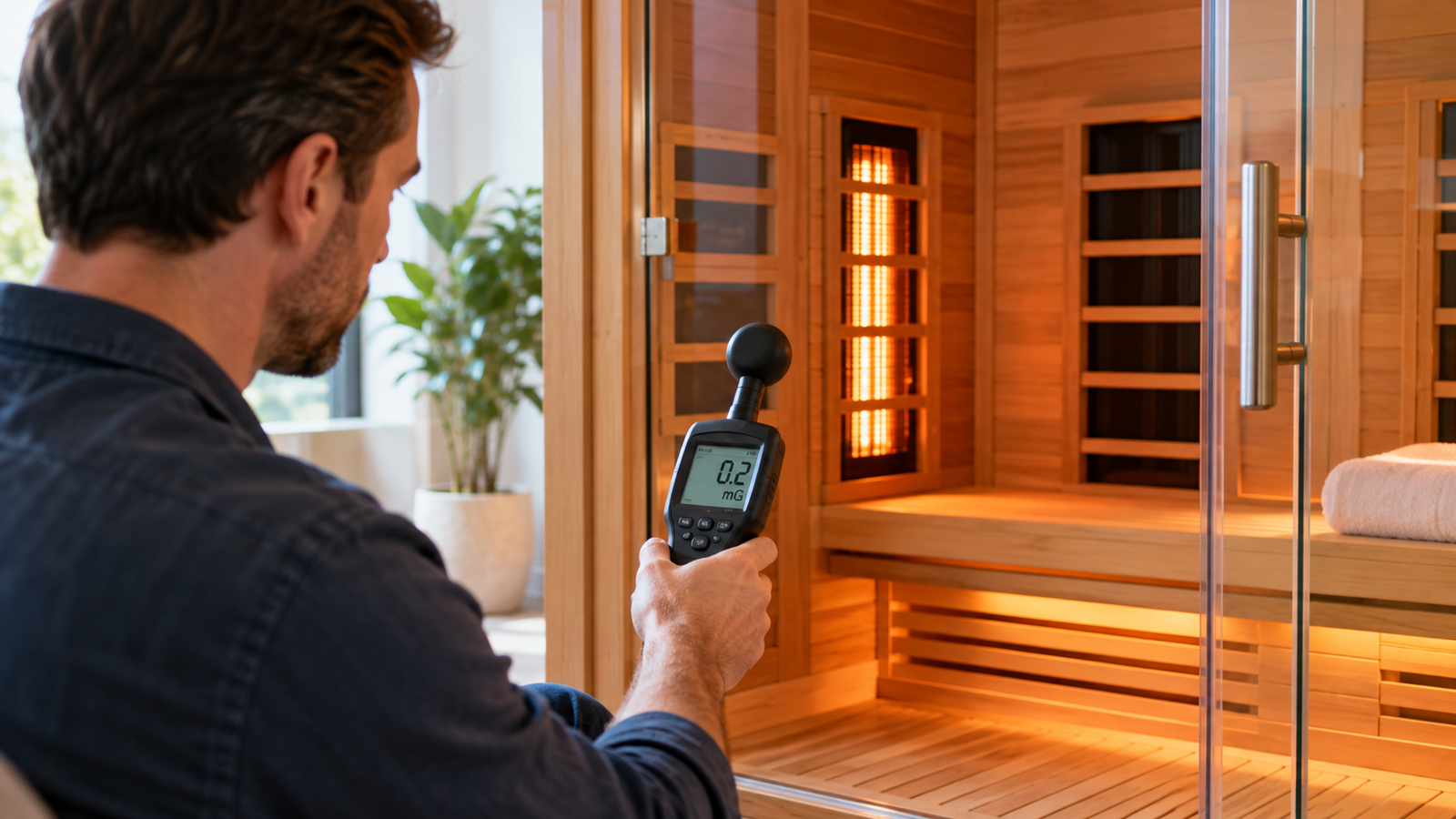
A credible low-EMF infrared sauna claim should name the type of field measured, measurement unit, meter and frequency range, position relative to the seated user, operating load, complete-system versus heater-only scope, and who did the testing. “Zero EMF,” a small number without methodology, or an electrical product-safety logo alone is not enough to compare two systems or prove a health advantage.
Low-EMF marketing often looks precise while hiding the one variable that changes what a number means: where, when and how the measurement was made. This guide is for US homeowners comparing infrared saunas before signing a high-value order. It is not a DIY rewiring manual or a claim that a low reading prevents disease.
First separate three things sold under “EMF”
- Extremely low-frequency magnetic fields: commonly associated with AC electrical current in heaters, wiring and controls, often reported in milligauss (mG) or microtesla (µT). Position, operating current and instrument frequency response matter.
- Low-frequency electric fields: a different quantity, commonly described in volts per meter (V/m). A magnetic-field number does not specify electric-field exposure.
- Infrared radiant heat: the intended thermal output of an infrared heater, not interchangeable with an AC magnetic-field reading. Neither should be confused with Wi-Fi or other radiofrequency emissions.
The World Health Organization’s EMF overview treats different field frequencies and exposure questions separately. Its public-health Q&A says evidence does not confirm adverse health consequences from low-level EMF exposure in general, while recognizing research uncertainties. Neither document establishes that a lower sauna-specific milligauss figure improves outcomes, and neither provides a brand ranking.
What SaunaCloud actually publishes—and what it does not
SaunaCloud’s VantaWave system page gives a manufacturer-reported average below 0.20 mG at the seated position with the complete system operating. The company contrasts this with tests of a detached heater panel and describes matched heaters, wiring, power supply and controls. That is more informative than a bare “low EMF” label because the manufacturer identifies a location and operating state.
However, the manufacturer itself states that this is not a third-party certification, and that the meter model, frequency response, sample count, individual readings and maximum have not been published. It does not furnish a downloadable full-system laboratory report on the referenced page. The published average is therefore a manufacturer claim with an incomplete audit trail, not an independently established measurement or a guaranteed maximum for every custom installation.
The World Health Organization’s review of extremely low-frequency fields addresses health evidence across exposure settings, not a sauna-shopping cutoff. Request better testing to assess the credibility and comparability of a product claim—not because a claimed threshold automatically proves a clinical benefit.
The seven documents and details to request before paying a premium
- Exact system identity: the delivered model, heater configuration, controller version and wiring layout, rather than a generic technology brochure.
- Who performed the test: manufacturer staff, contract laboratory or independent accredited laboratory; name the organization and report date.
- Instrument and calibration: actual meter model, calibration status, measurement units and frequency bandwidth.
- Test geometry: measurement height, seat position, distances from heaters, control box and wiring, and a diagram of all locations sampled.
- Operating state: all heaters at rated load, representative cycling state, red light and other electronics on/off as appropriate, plus background levels with the system off.
- Complete results: maximum and distribution of measurements, not only a convenient average; the number of samples and any exclusions.
- Delivered-unit assurance: whether the report applies to the specific configuration ordered and how changes in contractor-installed routing will affect it.
A useful comparison worksheet should list the same fields for Brand A and Brand B. If one number comes from direct contact with a single heater and another from a seated person in a fully wired room, ranking them by the lower number would be misleading even if both reports were honestly produced.
Why competitor numbers are not a fair scoreboard
As a concrete alternative, Clearlight describes True Wave low-EMF/ELF technology, including a manufacturer statement of under 1 mG measured directly on the heater and near-zero readings at the seated position, plus separate electric-field claims. Its April 2026 explanation discusses electric and magnetic fields together. These materials are manufacturer marketing and their context differs from SaunaCloud’s reported complete-system seated-position average.
Do not conclude that 0.20 mG at the seat beats 1 mG at the heater surface: distance and source scope are different. Ask both vendors for the same mapped seated-position, fully operating, same-bandwidth data and a complete report. Clearlight links to reports of tests on individual heater components elsewhere in its resources; a component report is not automatically a certificate of whole-cabin emissions after site installation.
| Evidence dimension | SaunaCloud VantaWave public claim | What the buyer still needs |
|---|---|---|
| Measurement location | Seated position, complete system. | Seat-by-seat map and exact distances for delivered room. |
| Operating state | Full system operating, according to manufacturer. | Load details and whether controllers/accessories were active. |
| Result shown | Average under 0.20 mG. | Individual values, maximum, number of readings and baseline. |
| Independent substantiation | Not described as third-party certified. | Dated full-system third-party report and instrument details if available. |
Electrical certification and medical protection are separate questions
A legitimate electrical listing for the delivered configuration can be relevant to electrical safety. It does not automatically measure magnetic fields at the bench or certify a zero-risk EMF environment. Conversely, a small mG reading does not demonstrate that the electrician installed a safe circuit or that waterproofing and thermal safeguards are adequate. Ask for the exact product/listing identity, installation instructions and applicable local approval rather than assuming a product badge covers a field-built custom project.
WHO’s assessments cover evolving evidence and uncertainty, including the difference between statistical associations and established causation in some long-term exposure research. Claims that an arbitrary consumer-shop threshold such as “under 3 mG” proves medical safety are not supported by the materials reviewed here. Avoid copying such thresholds from a competitor’s advertisement into a health recommendation.
When a low-EMF claim should—and should not—decide the purchase
If comparable measurement transparency is a personal priority, use it as a documentation and quality-control criterion: favor vendors who will provide clear, repeatable, relevant evidence for the complete installed system. But include temperature control, wood/ventilation care, electrical safeguards, service accessibility, warranty, total installed price and the heat experience itself in your decision. A low reading is not a substitute for those.
SaunaCloud could fit a buyer commissioning a custom room who values matching heater placement and controls and is willing to request supporting test documentation. It may not fit a buyer who requires publicly accessible independent full-system reports before placing an order, unless SaunaCloud provides additional evidence for the exact build. A fixed-size cabin with a documented test protocol may be easier to compare or install, depending on the property.
Copy-and-send evidence request
“Please provide the dated magnetic- and electric-field test reports for the model/configuration being quoted, including laboratory identity, meter type and calibration, measurement bandwidth, mapping diagram at seated positions, operating load, off-state baseline, individual and maximum readings, and any electrical-safety listing applicable to the fully installed configuration. Please identify which claims apply to our final drawings and which are based on a different example.”
Bottom line: do not buy a sauna solely because its EMF number is smallest. Buy only after the number is interpretable, the installation is safe, and the wider sauna experience meets your needs. Current public SaunaCloud evidence gives a useful starting condition but does not independently settle the measurement.
Ask SaunaCloud for the VantaWave project and test details
Research scope: US residential sauna purchasing and publicly available documentation reviewed October 20, 2026. No magnetic-field measurements or third-party engineering audit were performed by HomeChoiceWorks. Technical or medical claims are not professional advice or disease-prevention claims.
Keep researching
More decision guides from the same topic area.
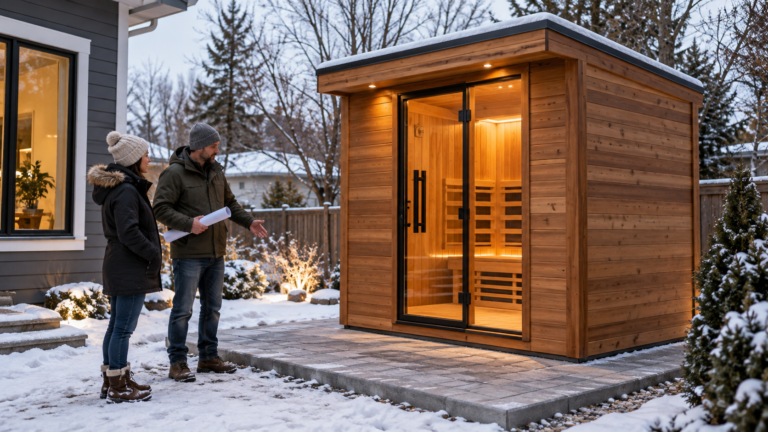
Outdoor Infrared Sauna: Site, Climate and Winter-Ready Buying Guide
An outdoor infrared sauna can make sense if you can provide a drainable, load-bearing site, weather-rated enclosure, correctly designed…
Read guide →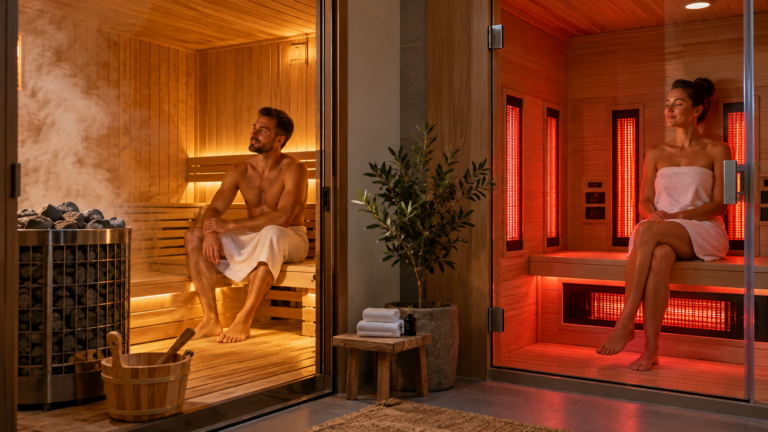
Infrared Sauna vs Traditional Sauna: Choose the Heat Before the Brand
Choose a traditional sauna if hot cabin air, heated stones and the option of steam are central to the…
Read guide →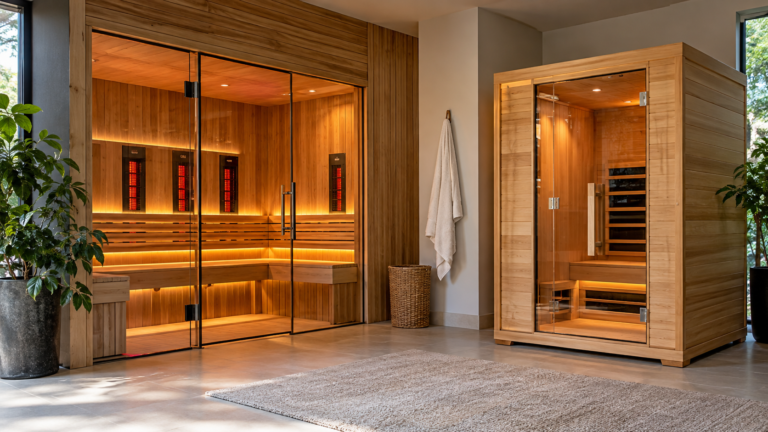
Custom Infrared Sauna vs Prefab: What You Really Need to Build
A custom infrared sauna makes sense when the sauna must work with the architecture of a particular room—not simply…
Read guide →