
We may earn a commission if you purchase through certain links on this page, at no additional cost to you.
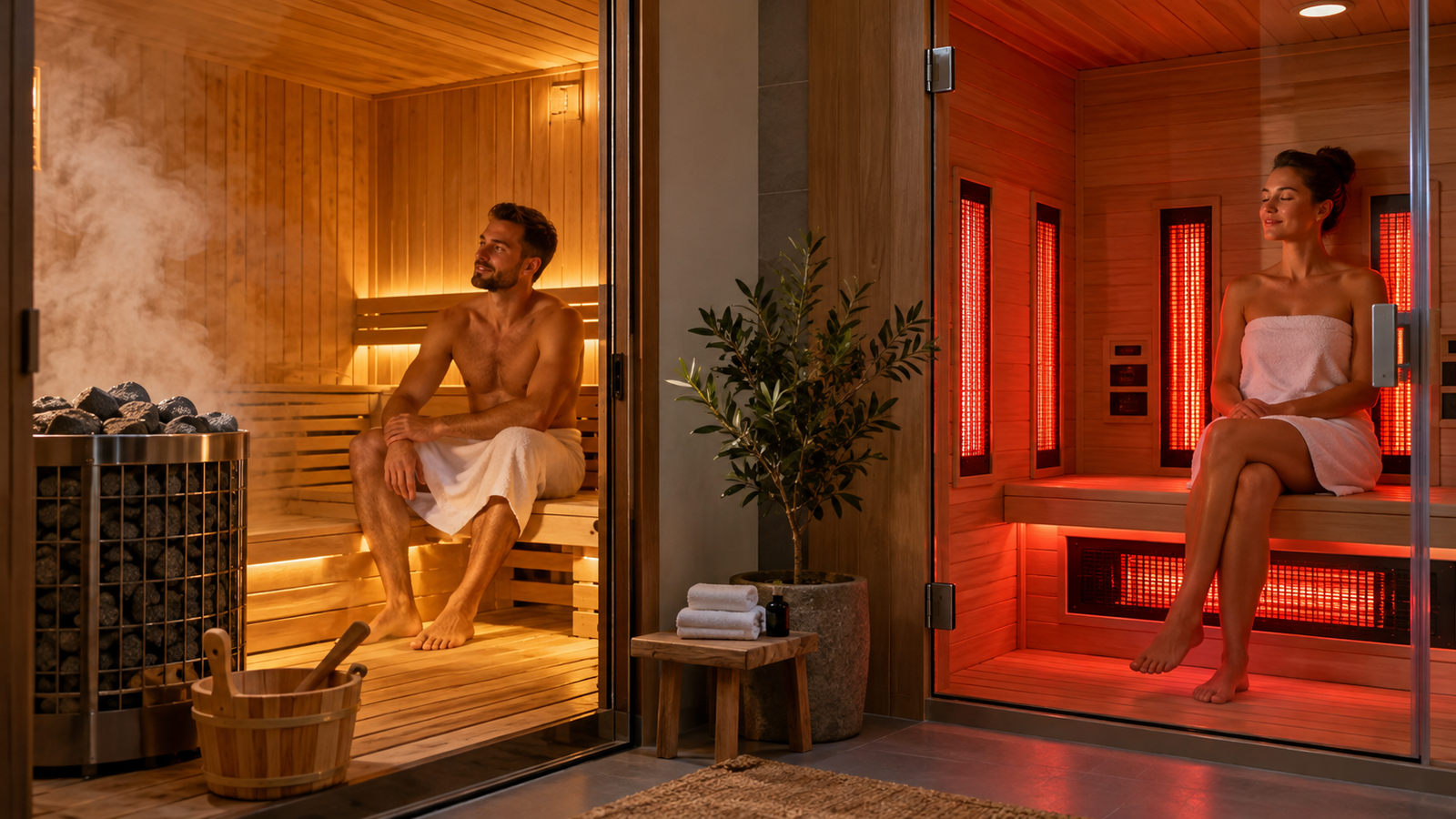
Choose a traditional sauna if hot cabin air, heated stones and the option of steam are central to the experience you want. Consider infrared when you prefer radiant heat with a generally lower air-temperature experience. For either one, choose the actual room and heater design before comparing electrical cost, installation complexity or health claims; neither format is automatically best for every person or home.
“Infrared sauna vs traditional sauna” sounds like a technology verdict. For a homeowner, it is first a preference test and then a building project: What kind of heat feels right? How do you use water and humidity? How much room and electrical capacity do you have? What does the finished room cost to own? A sauna with the wrong feel will not become a good purchase because of an attractive feature list.
What each kind of sauna does differently
Traditional saunas use a stove or electric heater with sauna stones to warm the cabin air and surrounding surfaces. Properly designed equipment may allow water on the stones, creating a short-lived change in humidity and perceived heat. Infrared systems use heaters that radiate energy toward the occupant and enclosure; the air need not be heated to the same level for a comfortable session. This does not mean infrared heats only the body or that traditional heat lacks radiation—both transfer heat through several physical mechanisms.
Harvia’s manufacturer comparison describes infrared units as commonly operating at around 40–60°C, while Cleveland Clinic’s sauna overview describes traditional sauna air temperatures commonly around 150–195°F (about 66–91°C). These are typical descriptive ranges, not a guarantee of what any two specified cabins will reach. Heater surface temperature, room air temperature, skin sensation and thermostat setting are different measurements.
The buying trade-offs in one table
| Question | Infrared | Traditional stove-and-stones |
|---|---|---|
| Heat experience | Radiant panels close to occupants; often gentler room air. | Hot air and stones; stronger high-heat ritual. |
| Water on stones | Not a standard feature; do not splash panels or controls. | Often part of the ritual with specifically compatible heater and materials. |
| Installation emphasis | Panel location, seating geometry, controls, service access and electrical requirements. | Stove and stone clearances, ventilation, water/heat exposure, electrical or flue design. |
| Poor fit | If you mainly want intense room heat and löyly (steam from stones). | If you dislike very hot cabin air and want a different thermal sensation. |
Use actual products to avoid misleading generalizations
A Harvia Virta Combi HL80SA is a specifically identified traditional electric heater: 8 kW, 240 V single-phase for the listed US-oriented model, designed for compatible sauna rooms and configurable wet/steam functions. Its product information includes room-volume and clearance constraints. It is a heater, not a complete delivered cabin: framing, finishes, ventilation, electrical work and other parts of the room remain to be priced.
By contrast, SaunaCloud’s VantaWave system specifies infrared heater placement, controls and electrical plans together for an individually designed room; the physical room and professional installation remain homeowner/trade responsibilities. Its Atlas One illustrates a 6 kW, 240 V one-person example build, not a standard plug-in electrical requirement for every SaunaCloud order. These two examples intentionally illustrate different contracting formats; they do not establish a representative industry-wide electricity-cost ratio.
A third path is a complete prefabricated infrared cabin such as the Clearlight Sanctuary 2, which publishes a defined size and 120 V / 20 A connection for that model. Its installation problem differs again from buying components for a custom room. Always compare completed installations of similar capacity—not a traditional heater-only quote against a complete infrared cabin, or a compact cabin against a large custom room.
Which one costs less to operate?
Neither format has a guaranteed cheaper session without knowing the actual connected power, heating cycle, insulation, preheat duration, ambient conditions and electricity tariff. A rough upper-bound calculation for an electric heater while drawing full rated power is: rated kilowatts × hours energized × your electricity price per kWh. For illustration only, an 8 kW heater energized continuously for 45 minutes uses 6 kWh; at a hypothetical $0.20/kWh that would be $1.20. A thermostat that cycles power or a different warm-up period changes the result. This is not a measured Harvia operating cost.
Do not infer that every infrared system is low wattage: SaunaCloud gives different example loads for different room designs. Insulation, ventilation, weather, actual use and the cabin’s delivered specification matter more than labels such as “low energy.” For the installed budget, include the whole room, framing and floor, ventilation or moisture design, glazing, electrical work, inspection, accessories and long-term parts replacement. For a wood-fired traditional heater, add fuel storage, venting/chimney requirements and local combustion restrictions rather than treating it as a direct electrical comparison.
What about health benefits?
Warmth, sweating and relaxation can be rewarding, but avoid buying a particular modality on the assumption that research about one sauna format automatically proves the other has the same clinical outcomes. Cleveland Clinic summarizes potential sauna-related benefits while noting research limits and advising attention to dehydration, heat stress and individual medical conditions. Specific studies may concern Finnish/traditional bathing, mixed heat exposures or populations unlike you. They are not device-specific evidence for SaunaCloud, Harvia or Clearlight.
Both forms can cause heat illness or dehydration. If you have cardiovascular concerns, take medications that affect heat tolerance, are pregnant, or have other relevant conditions, ask your clinician about sauna use. Follow the actual manufacturer’s exposure and supervision instructions; a lower air temperature is not automatic proof a particular session is medically safe.
A preference test worth doing before ordering
- Try the sensations separately at a reputable facility if possible. Notice comfort, intensity, humidity preference and willingness to return—not a marketed calorie estimate.
- Write down the must-have ritual: quiet radiant warmth, traditional stone-and-steam sessions, shared seating or outdoor social use.
- Size the actual room: seated space, ceiling, glazing, clearances, access and safe ventilation; confirm the finished design with the appropriate contractor.
- Get like-for-like quotes: finished enclosure, heater, controls, electrical connection, professional labor and delivery, plus a maintainable service plan.
- Compare warranties by part: for example, SaunaCloud’s residential warranty has different terms for heaters, controllers, wood and red-light elements; do not compare warranty headlines only.
When each choice is likely to disappoint
Infrared may disappoint someone expecting very hot air, steam from stones and a classic group-sauna ritual. It may also be a poor fit if a complicated bespoke install offers little value over an adequately sized prefab unit.
Traditional may disappoint someone who prefers lower air temperatures, needs a constrained domestic build with limited provision for a stove/ventilation, or does not want the extra moisture-management decisions associated with adding steam. This does not establish a universal cost or safety superiority for infrared.
Bottom line: make the heat preference decision first, the room and installation decision second, and the brand decision third. If custom radiant heat with room-specific design is the goal, SaunaCloud is one supplier to quote; if stones and löyly are non-negotiable, shop appropriate traditional-sauna systems instead.
Explore a custom SaunaCloud infrared proposal
Research scope: US residential buying; named manufacturer documents and independent clinical guidance checked October 20, 2026. No comparative sauna testing or medical efficacy study was conducted by HomeChoiceWorks. Electrical, permitting and safety decisions depend on the actual product and location.
Keep researching
More decision guides from the same topic area.
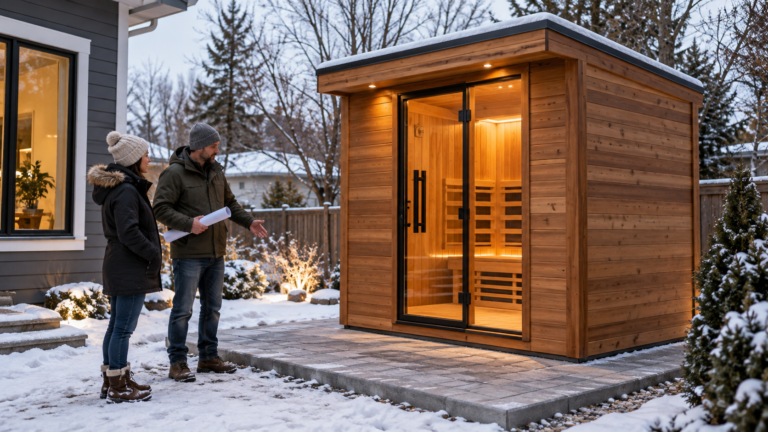
Outdoor Infrared Sauna: Site, Climate and Winter-Ready Buying Guide
An outdoor infrared sauna can make sense if you can provide a drainable, load-bearing site, weather-rated enclosure, correctly designed…
Read guide →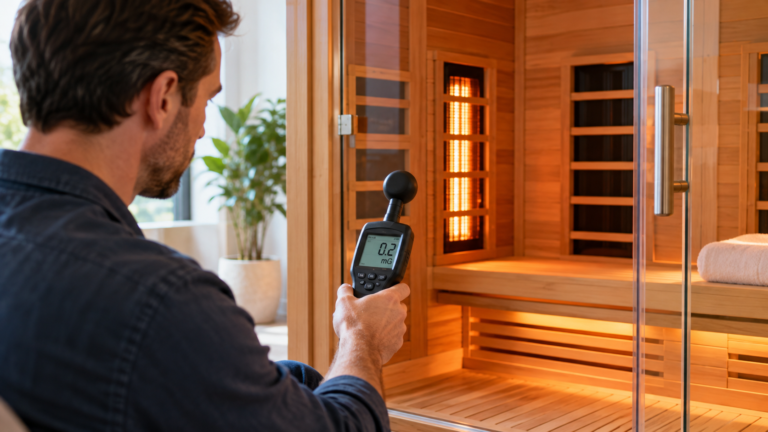
Low-EMF Infrared Sauna: How to Verify the Numbers Before Buying
A credible low-EMF infrared sauna claim should name the type of field measured, measurement unit, meter and frequency range,…
Read guide →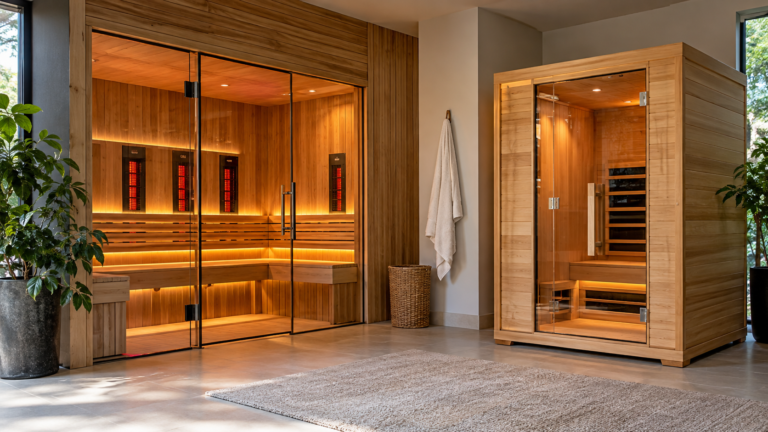
Custom Infrared Sauna vs Prefab: What You Really Need to Build
A custom infrared sauna makes sense when the sauna must work with the architecture of a particular room—not simply…
Read guide →