
Commercial disclosure: Some links to Superior Products are affiliate links; we may earn a commission if you purchase through them.
Choose the job before the bottle
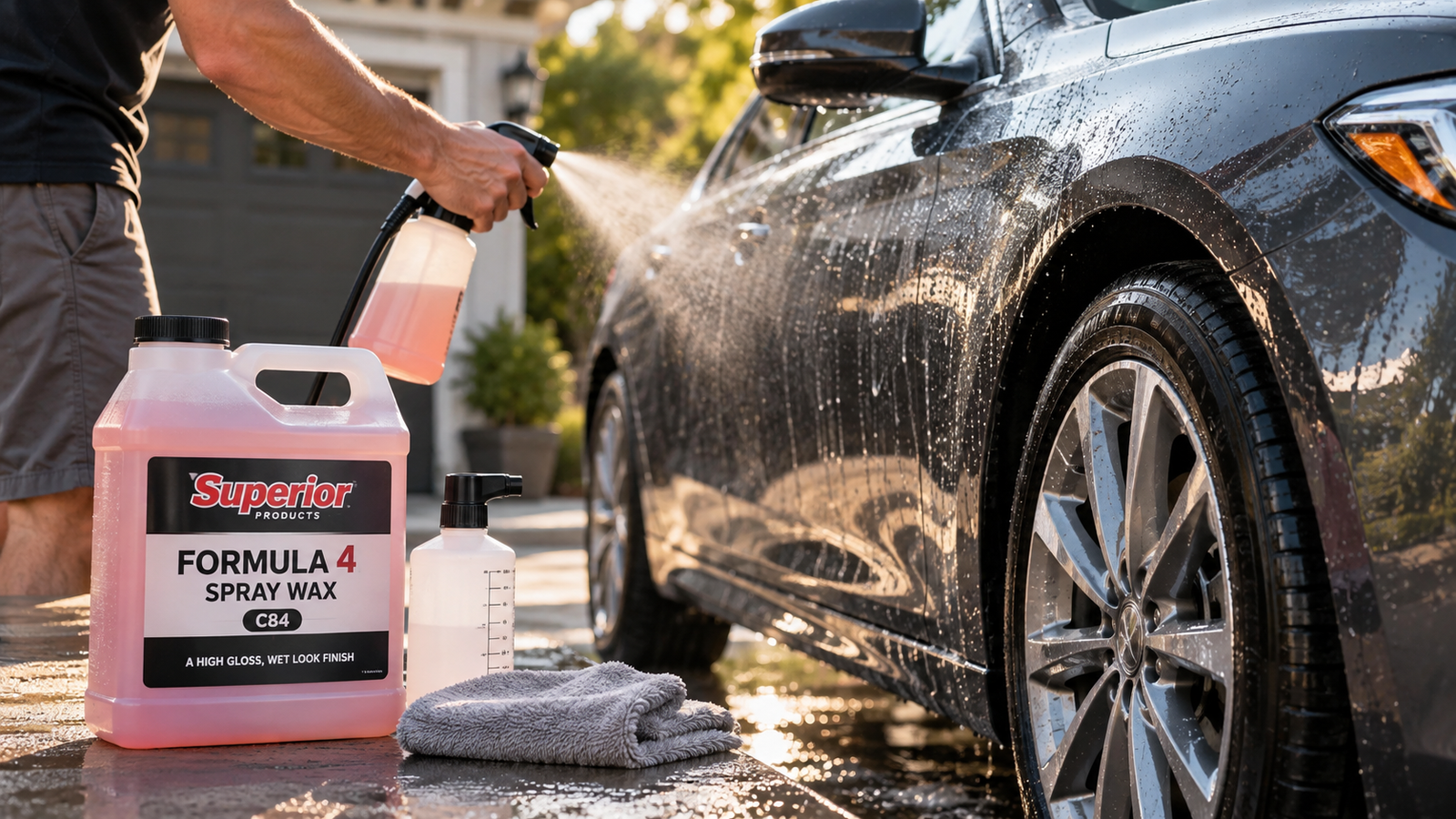
Superior Products Formula 4 Spray Wax (C84) is primarily worth evaluating as a post-rinse drying aid that changes how water leaves a freshly washed vehicle. The manufacturer also advertises a light protective finish, but that should not be treated as independently demonstrated long-term paint protection. If your main goal is a durable water-repellent layer rather than easier drying, compare a dedicated sealant or wet-applied protectant instead.
The phrase Superior Products Formula 4 Spray Wax can suggest a conventional wax you apply to dry paint. The manufacturer’s current C84 listing, however, describes a concentrated finishing product for use after washing and rinsing, while the exterior is still wet. That distinction changes both the product comparison and how its dilution cost should be judged.
Three outcomes people often confuse
| Goal | What matters | Better buying route |
|---|---|---|
| Reduce standing rinse water before towel-drying | Water sheeting/beading during the finishing rinse; compatible wash procedure | Formula 4 is a plausible drying-aid candidate. |
| Avoid mineral spots in difficult water or hot sun | Water quality, dwell time, drying technique, ambient conditions | Improve rinse/drying method first; do not buy a “spot-free” guarantee. |
| Add longer-lasting exterior protection | A dedicated protectant’s documented application, durability claims and compatibility | Compare a purpose-built rinse-on protectant such as GYEON Q²M WetCoat. |
These are different outcomes, not interchangeable product categories. Superior’s listing promises easier drying and light wax protection; it does not provide a controlled same-car, same-water, multi-week durability comparison against dedicated protection products. Griot’s Garage’s drying-aid comparison also illustrates that even products within one manufacturer’s finishing lineup serve different objectives. That comparison is commercial manufacturer guidance, not an independent cross-brand test.
How the Formula 4 workflow differs from ordinary wax
For C84, the online directions describe: wash the car, rinse it, apply the correctly diluted product to a still-wet exterior, then follow the applicable final rinse or drying method. That is different from spreading a conventional paste or liquid wax onto dry paint and buffing it away. Avoid experimenting with untreated concentrate or substituting a social-media ratio for the exact label supplied with your bottle.
Dilution instructions are not consistent across the available documents
The current product listing states 5:1–10:1 dilution, while an older C84 technical data sheet describes 40:1–120:1 with automatic car-wash dosing equipment. Those are materially different application contexts and should not be casually blended. Confirm the current label, use method and dilution with Superior Products for your container before preparing any solution. The manufacturer’s 6–8 fl oz per vehicle reference applies to automated wash equipment, not a verified at-home dose.
Can it genuinely make a vehicle spot-free?
The brand describes water sheeting and a spot-free finish, but no rinsing aid can remove every variable behind spotting. Water can still dry on glass, paint, trim and horizontal panels, particularly when mineral content or evaporation conditions are unfavorable. The manufacturer does not supply an independent controlled test in the accessible documentation establishing that Formula 4 prevents all spots in all water conditions.
A public owner discussion includes a contributor who says Formula 4 helped them manage spotting during challenging washes, while other remarks provide only broad favorable product impressions. That is useful as an example of why someone chooses the product, not proof of zero water spotting or evidence for a universal dilution method. The same discussion includes off-label user mixtures that conflict with the current online directions; those mixtures are not recommended here.
Does Formula 4 replace a protective sealant?
Probably not if durability is the main reason for buying. Superior markets C84 as providing light wax protection and, in its FAQ, suggests up to around seven days against spotting. Those are merchant claims, not confirmed durability under a controlled method or a guarantee for your water source, paint or climate.
For comparison, GYEON’s Q²M WetCoat is presented as a distinct wet-surface, rinse-off protective product. GYEON advertises a real-world lifespan of up to 12 weeks and directs users to rinse promptly, panel by panel. That number is also a manufacturer claim; it should not be read as a verified twelve-week result or an apples-to-apples independent ranking. Its more protection-focused role, rather than an identical price or chemistry, is the relevant comparison.
There is also a no-new-chemical route: improve a wash-and-rinse routine with suitable water, controlled drying conditions and clean microfiber towels. That may address the actual problem more directly if water spots are your only complaint.
What does a concentrate really cost per wash?
The store’s price range spans multiple package sizes, so a headline price is not a trustworthy cost-per-wash comparison. Start with the actual delivered price for the exact C84 package, then use only the ratio confirmed for your equipment or application.
Dilution-yield worksheet (not an application instruction)
A 1-US-gallon concentrate package contains 128 fl oz. If the manufacturer’s 5:1 water-to-product ratio is confirmed for your task, one gallon would theoretically yield 6 gallons of prepared solution, equal to 24 portions of 32 fl oz. At 10:1, it would yield 11 gallons, or 44 such portions.
Prepared 32 fl oz material cost = exact delivered concentrate price ÷ 24 or ÷ 44, depending on the confirmed ratio.
This is an inventory-equivalent calculation. It is not the cost per vehicle without a measured, appropriate application rate. Include the spray vessel, towels, protective supplies, storage and likely unused product.
The older equipment-specific technical sheet uses a far higher dilution; substituting that ratio into the calculation would produce a different number and could be unsuitable outside its intended commercial system. No unsupported single “cost per car” is asserted here.
Safety-document identity deserves a check
A supplier-hosted PDF in a C84-labeled file path contains a 2022 safety data sheet titled Spray Wax with its own product identifier (1178655) and serious hazard warnings. The document body does not clearly identify current retail SKU C84, and its 2022 revision does not establish the hazard classification of the exact formulation shipped in 2026. That mismatch should not be ignored or turned into a definitive claim about every Formula 4 bottle. Request the current C84-specific Safety Data Sheet directly from the supplier, check that the product identifier matches the label, and follow its handling guidance before use. If the match cannot be confirmed, postpone using the concentrate.
Buying decision: drying convenience or protection?
- Consider Formula 4 when post-rinse drying is your central task, the present bottle has clear confirmed mixing instructions, and you accept that protection and spot prevention are limited, conditions-dependent claims.
- Choose a dedicated protectant when the result you care about is a lasting hydrophobic finish; compare the actual application method and compatibility instead of brand claims alone.
- Choose an improved drying method when mineral residue, working in full sun, or slow drying is the main problem—and another chemical may add cost without fixing it.
- Wait before using if your vehicle has a specialty coating with uncertain compatibility, or if the available product label, dilution and current SDS do not agree.
Check Superior Products’ current Formula 4 range (affiliate homepage)
Source check: October 13, 2026; US consumer-use context. Published C84 instructions and the older technical sheet differ; safety-document identification also requires confirmation for the exact container. Manufacturer performance statements are not independent testing. Prices, stock and instructions can change; no compatibility with every aftermarket coating is assumed.
Keep researching
More decision guides from the same topic area.
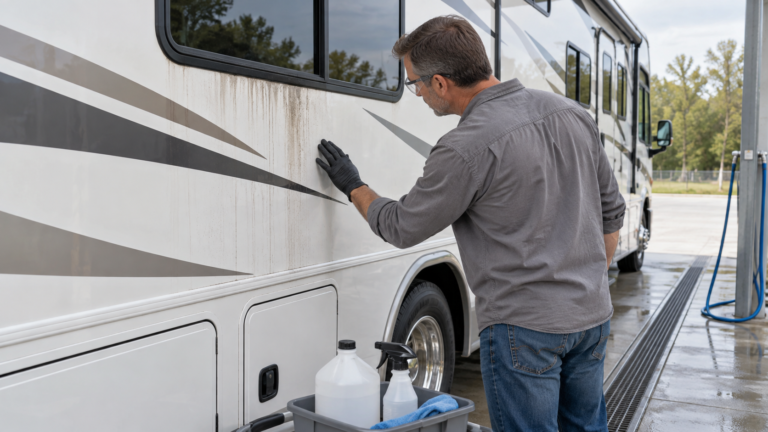
Road Warrior Superior Products: RV Streaks and Surface Fit
Use the soil and surface to decideRoad Warrior C46 is worth investigating for persistent road film or black streaks…
Read guide →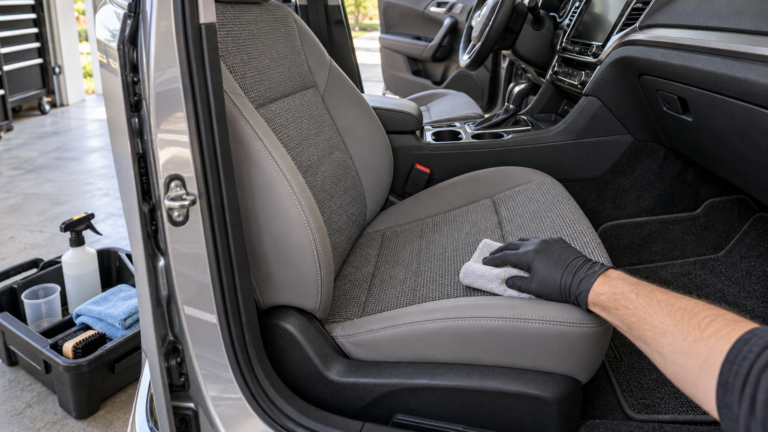
Superior Products Interior Cleaner: Match the Material
Choose the material and cleaning method firstGreen All is a multipurpose concentrate to consider for materials your vehicle maker…
Read guide →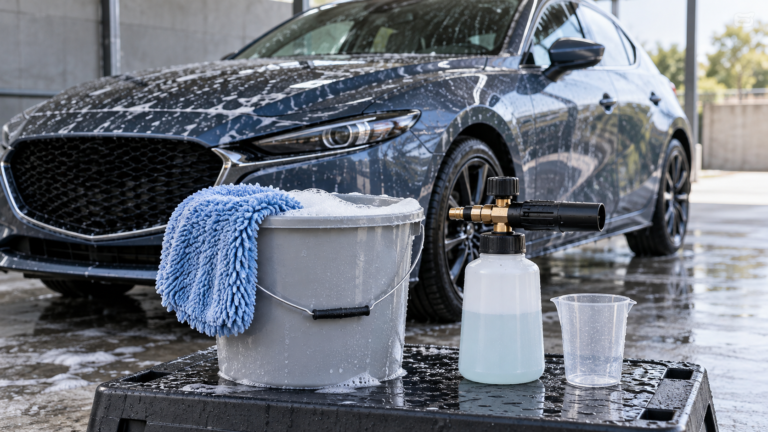
Superior Products Dirt Buster: Hand Wash or Cherry Foam?
Dirt Buster fits a conventional hand-wash decisionDirt Buster C60 is positioned for routine hand washing. Cherry Foam C62 is…
Read guide →