
Commercial disclosure: We may earn a commission if you purchase through certain links on this page.
A hair topper is worth considering when you want to keep much of your own hair visible and add coverage in a specific area. A full wig is worth considering when you want a complete hairstyle without matching a separate piece to exposed lengths. For a clip-in topper, confirm where every clip will attach before choosing its color or length.
The hair topper vs wig decision is easier when you separate three questions: what needs covering, what will hold the piece in place, and how much blending you want to do each morning. A topper is a partial hairpiece; a full wig provides a complete cap-based hairstyle. Neither category is automatically more natural-looking, easier or more comfortable for every wearer.
This guide compares those practical choices using published specifications and care guidance. HomeChoiceWorks has not worn or tested the products. The Godiva’s Secret examples and online-policy references were checked on October 15, 2026; shopping-policy examples concern US direct online purchases.
Map the area before comparing hair length
Look at the front, part, crown and sides separately. Decide which areas you want covered and which hair you intend to leave visible. Take that description to a fitter or send it with your questions to the seller. A photograph from straight ahead may not show the crown area that matters most to you.
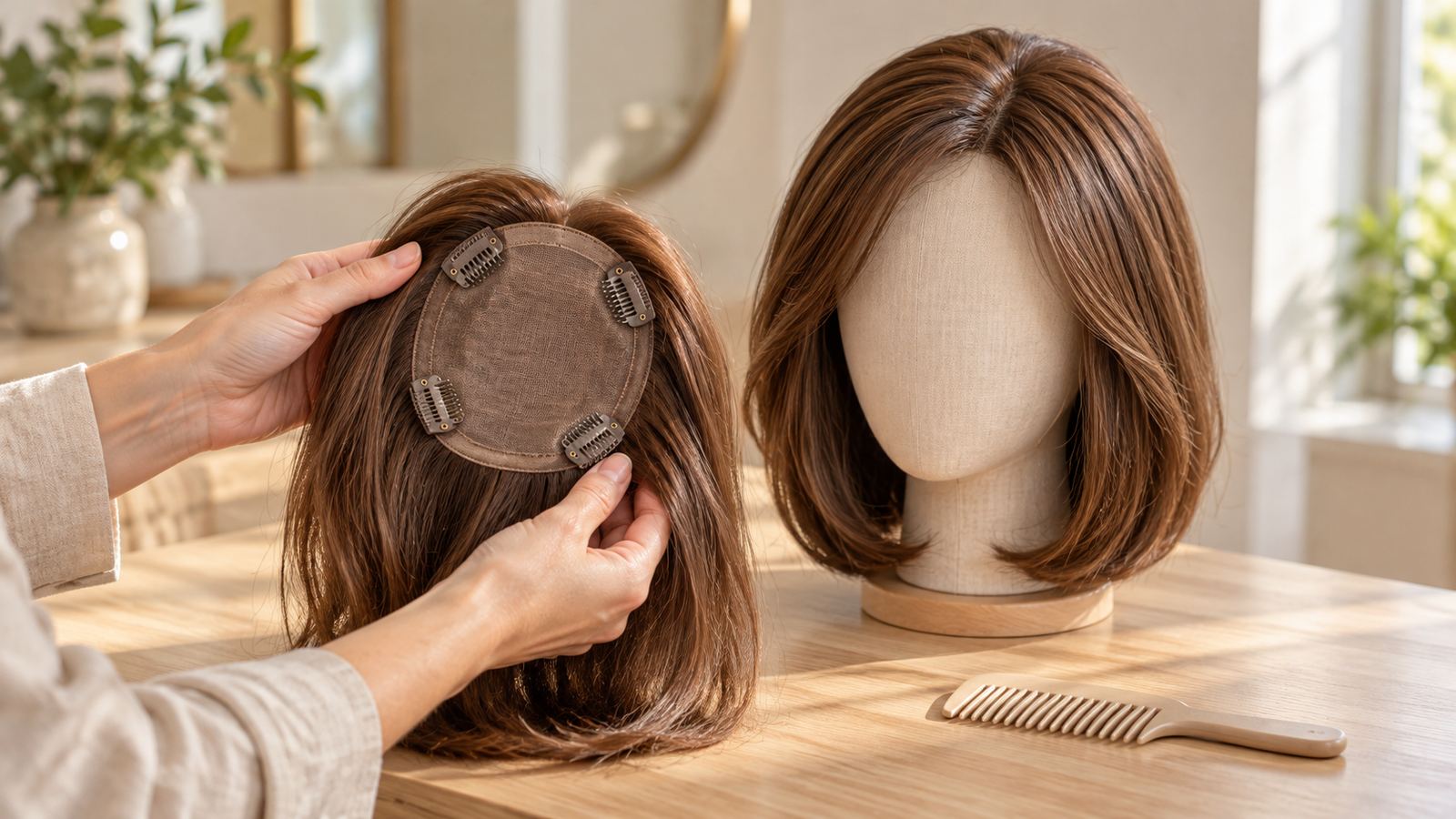
A topper’s base footprint and its hair length answer different questions. The base is the part that sits on the head; the strands extend beyond it. Long strands do not turn a narrow base into broad coverage. Jon Renau’s 2025 Topper Coverage Placement chart distinguishes front/fringe, crown and part/top designs, illustrating why “topper” is not one standard shape.
| Listed model | Published base and attachment | Decision to resolve |
|---|---|---|
| Petite Top 14″ | 5 inches long × 3 inches wide; two metal clips; machine-teased. | Does this narrow footprint cover the intended area while leaving useful clip positions? The 14-inch name describes hair length, not base size. |
| Medium Top | 6.5 inches long × 5 inches wide; four metal clips; machine-teased. | Does the larger footprint improve coverage, and can all four clips be placed comfortably? A larger piece also needs a blending plan. |
These are examples of different footprints, not a ranking. A paper outline can help you visualize the listed dimensions, but it cannot reproduce the shape, curvature or clip placement of the actual base. Request an underside photograph and check the front-to-back orientation. If an edge or attachment point falls where you cannot comfortably secure it, do not treat a length measurement as a solution.
Check what the clips will actually hold
The Medium Top listing makes a broad claim about grip in very fine or slippery hair. However, Godiva’s own topper instructions discuss extra preparation for slippery hair and a separate front grip accessory for extremely fine hair; the described setup still attaches the rear clips to the wearer’s hair. That qualification matters more than a blanket reassurance.
If you cannot identify suitable attachment points, arrange a fitting before buying a clip-in topper. Ask the fitter to demonstrate the exact setup and explain any accessories. A full wig may be a better route to investigate, but it still needs its own fit and security assessment. Do not keep tightening or repositioning clips to force an uncomfortable setup.
Ask for a demonstration that includes removal as well as application. If a proposed solution requires an accessory, include its price and the extra steps in your comparison. An accessory recommendation is not proof that every topper, base or wearer is compatible with it.
Decide how much of your own hair you want to style
| Your situation | Topper route | Full-wig route |
|---|---|---|
| You like your existing sides and lengths | Keep them visible and focus on matching the transition into the piece. | Decide whether covering a hairstyle you already like is worthwhile. |
| Your own texture differs from the piece | Budget time to make the two textures work together. | Choose the overall hairstyle you want, then assess how to contain your own hair underneath. |
| You want a distinctly different color | Plan how exposed hair will relate to the new shade. | A complete hairstyle reduces the need to match exposed lengths, provided they are contained. |
| You cannot get a reliable clip setup | Pause the purchase and seek fitting help. | Investigate a full cap and its appropriate security method instead. |
Jon Renau’s topper-blending guidance emphasizes color, length, texture and application together. It recommends matching the hair framing the face and seeking professional color help when useful. Godiva’s topper tips likewise discuss matching the texture of the wearer’s hair to the piece. These are manufacturer instructions, not a promise that blending will take only seconds.
Consider two common situations. Someone happy with their own bob may accept a little blending to keep its sides and ends visible. Someone who wants a complete color change and does not want to restyle exposed hair may prefer investigating a full wig. The useful distinction is the work each person wants to keep doing, not which product has less hair.
Use matching support without treating it as a guarantee
Godiva’s Pick A Wig page invites customers to send photographs and relevant details for style and color suggestions. Include the area you want covered, your current length and texture, whether you want your own fringe visible, and the exact topper under consideration. Ask what the advice assumes about attachment. A photograph cannot demonstrate grip or comfort.
Public accounts show why expectations deserve checking. On Trustpilot, Laurie Brenzel’s August 5, 2025 review described a topper that differed from her expectations, including its fringe. The merchant disputed aspects of the description and offered return help. An August 28 review under Laurie reported that the problem had been resolved; the merchant linked that update to the earlier review. This is an individual reported experience, not proof of a general defect or guaranteed service outcome.
Before paying for a blend cut, check the online return policy: eligible products must return within 20 days of shipment, with tags and packaging intact and no wear, washing or alterations. A cut made to improve the blend can therefore remove your return option. Decide on fit and color first.
Build a shortlist that can survive a fitting
- Write down the exact area to cover and which hair will remain visible. A vague wish for more fullness is not enough to choose a base.
- For a topper, record the base dimensions, clip layout, fringe and intended part. For a full wig, assess the cap and planned security method.
- Check color and texture at the visible transition points. If the only workable plan involves changing your own hair, include that commitment in the decision.
- Compare the complete setup: piece, necessary accessories, fitting or trimming, and the time spent preparing your own hair.
- If coverage, attachment or blending remains uncertain, use a fitting appointment rather than guessing from a styled photograph.
A topper makes sense when targeted coverage and integration work together. A full wig deserves serious consideration when integration is the obstacle. If neither setup feels manageable, keep looking with a fitter rather than accepting a purchase merely because its category sounded right.
Explore Godiva’s Secret wigs and toppers
Sources checked October 15, 2026. Linked specifications and guidance are informational sources; the shopping button is an affiliate link. Confirm the selected variant and the selling channel’s terms before ordering.
Keep researching
More decision guides from the same topic area.

Dermalogica Daily Microfoliant Review: Fit, Risks and Cost
The purchase decisionDaily Microfoliant is worth considering if you want a rinse-off powder exfoliant and your routine leaves room…
Read guide →
Best Shampoo for Color-Treated Hair: 5 Fits Compared
The best shampoo for color-treated hair is the one that meets your non-negotiable needs before it wins a marketing…
Read guide →
Pureology Hydrate Shampoo Review: Hydrate or Sheer?
Pureology Hydrate is the richer starting point for dry hair that benefits from a more conditioned finish. Hydrate Sheer…
Read guide →