
Commercial disclosure: We may earn a commission if you purchase through certain links on this page.
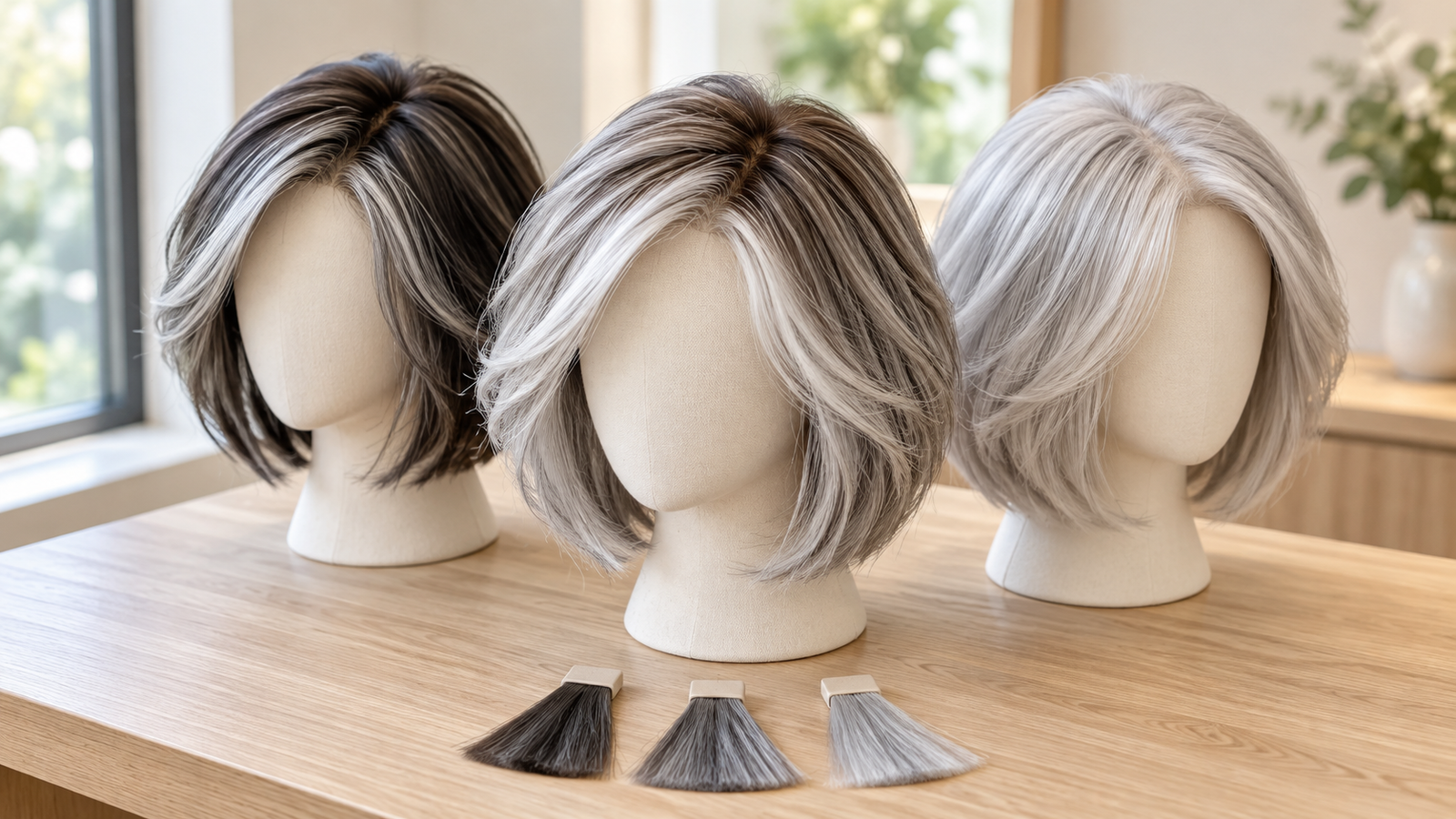
For gray wigs, compare the overall depth, the brightness around the face and the contrast at the roots. Shortlist two or three shades, inspect a physical sample where possible, then check the exact style in that color. A pale front on a salt-and-pepper blend can matter more to your preference than how the back looks.
Gray and grey describe the same color category, but the products within it can look very different. Some retain considerable brown or charcoal; others are mostly light silver or white. This guide uses Godiva’s Secret color descriptions to help you narrow the choice, without claiming that an online photograph can establish a personal match.
HomeChoiceWorks has not physically compared these swatches or worn the wigs. The shade names, sampling offer and direct-store return terms below were checked on October 15, 2026. Prices are in US dollars, and the sampling and return-cost examples apply to US online shopping.
Separate the base, the face and the roots
Ask three questions before choosing a style photograph you like: how dark should the overall hair be, how bright should the hair beside your face be, and do you want visibly darker roots? You can like one part of a blend and dislike another. Write those preferences separately rather than asking for a vague “natural gray.”
| Shade | Merchant’s description, summarized | Question it helps you explore |
|---|---|---|
| Smokey Frost | Dark brown mixed with light gray. | Do you want to retain substantial depth? |
| Sandy Silver | Brown-gray with lighter gray at the face. | Do you prefer a darker overall blend with a brighter front? |
| Frosted Taupe | Very light brown mixed with soft gray. | Would a brown-and-gray combination suit your intended look? |
| Silver Stone / Silver Stone-R | Salt-and-pepper with a lighter face; the -R version adds dark-brown roots. | Do you want root contrast as well as variation through the lengths? |
| Silver Mink | Silver gray mixed with very light gray. | Do you want a predominantly light-gray direction? |
| Moonlight / Moonlight-R | Very light gray; the -R version adds dark-brown roots. | Do you prefer pale lengths with or without a darker root? |
| White | Described as snow-colored. | Do you want a white direction rather than a darker gray blend? |
Source: Godiva’s Secret Wig Color Guide. These are the seller’s color descriptions, not measured color values. The guide is a vocabulary for shortlisting; it does not prove that every shade is offered or available in every style. Keep the complete color name, including any suffix, with the model you intend to order.
Give face-framing brightness its own check
A useful comparison is not simply darker versus lighter. Ask how much of the brightest hair sits at the front, where you will see it in the mirror. If you want continuity with your existing hair, compare the visible hair near your face. If you want a different look, judge whether you like the contrast rather than forcing a match.
One attributed account illustrates the issue. In the merchant’s RaveCapture review feed, Donna G’s November 19, 2024 review says a Silverstone topper had more bright hair around the face than she preferred and that she wished she had chosen Sandy Silver. That is one wearer’s preference about a topper, not evidence that Silver Stone is wrong for other people or every style. It suggests a specific question to ask before buying.
Rooting deserves a separate decision too. A darker root is not inherently more realistic for everyone. Decide whether you want that contrast. Do not substitute Silver Stone for Silver Stone-R, or Moonlight for Moonlight-R, merely because the rest of the name is the same.
Use samples and photos for different jobs
Godiva’s swatch guidance notes that screens and room lighting can change how a shade appears and that the same color name can blend differently between styles. A physical swatch helps you inspect the fiber in your surroundings; an exact-style photo helps you investigate color distribution and silhouette. Neither is a guarantee of a perfect match.
- Narrow the choice to two or three shades that answer your depth and face-brightness preferences. Keep their labels attached so similar samples do not get mixed up.
- Hold each sample beside the hair that will remain visible, or beside your face if the wig will cover your hair. Compare near a window and again under the indoor light you commonly use.
- Look at the roots and front of the exact style. Ask whether the picture shows the complete selected shade, a different variant or a customized piece.
- Make a short note for each sample: preferred overall depth, acceptable front brightness and acceptable root contrast. Use the notes to choose, rather than repeatedly switching between unrelated photos.
The Grey Color Swatches product page lists individual samples at $4 and states that swatch-only orders ship without a shipping charge within the US. It says a two-color sample represents a blend, while shorter strands represent highlights. These are small samples, not wigs. Confirm the chosen swatch and checkout terms; swatch-only shipping outside the US is not offered on that page.
A sample is most useful when two plausible shades remain difficult to separate. At the checked $4 price, two samples total $8 before any applicable tax. That is a planning comparison, not a savings guarantee: it may reduce uncertainty, but cannot establish how the whole wig will sit or how its color will be distributed.
Read customer photographs with their labels
Godiva’s Real Client Photos page instructs shoppers to open a photograph for its wig name, color and testimonial. Use that combination, rather than saving an unlabeled image. For example, Donna S’s February 25, 2024 RaveCapture review with an attached photograph identifies Freedom in Moonlight-R and says it was trimmed. A customer’s customized result should not become your assumption about the untouched factory cut.
Customer pictures can help you collect questions, but they do not provide standardized lighting, camera settings or an independent color test. This guide does not rank shades from those images. If a color decision hinges on a particular photograph, ask the seller to confirm the model, full color name and any alterations, then compare a sample yourself.
Godiva’s style-selection page offers photo-based suggestions. Send the exact shortlist and explain which feature worries you: dark roots, pale fringe, overall warmth or matching exposed hair. Request a specific answer about that feature. “Will this look good?” gives the adviser less useful information.
Keep a color mismatch reversible for as long as possible
Under Godiva’s online return policy, eligible items must reach the merchant within 20 days of shipment, in original condition with tags and packaging. Wear, washing, alterations and heat styling disqualify a return. For the US portal route, store-credit return shipping is $9.95; the refund route is $19.95 including the $10 restocking fee. Credit cannot later become cash, and color suggestions do not waive the fee.
If the shade is wrong, pause before a trim or styling session and contact the seller promptly. Keep the model, color label, order details and return deadline together. Ask how a replacement order or credit would work rather than assuming an automatic free color exchange. The $8 two-sample illustration and the listed return charges concern different transactions; they are not a promise of how much you will save.
When an online shortlist still feels uncertain, a local fitting with the relevant colors available may be the better next step. Confirm sample stock, appointment cost and selling terms before travelling. A good gray choice is one whose overall depth, face-framing brightness and roots you have deliberately chosen—not simply the shade with the most appealing name.
Check Godiva’s Secret gray options
Sources checked October 15, 2026. Color definitions come from the merchant; customer accounts are attributed examples, not representative findings. The shopping button is an affiliate link. Recheck shade availability, sampling and return terms before ordering.
Keep researching
More decision guides from the same topic area.
Dermalogica Daily Microfoliant Review: Fit, Risks and Cost
The purchase decisionDaily Microfoliant is worth considering if you want a rinse-off powder exfoliant and your routine leaves room…
Read guide →
Best Shampoo for Color-Treated Hair: 5 Fits Compared
The best shampoo for color-treated hair is the one that meets your non-negotiable needs before it wins a marketing…
Read guide →
Pureology Hydrate Shampoo Review: Hydrate or Sheer?
Pureology Hydrate is the richer starting point for dry hair that benefits from a more conditioned finish. Hydrate Sheer…
Read guide →