
Commercial disclosure: Some links to Superior Products are affiliate links; we may earn a commission if you purchase through them.
Short answer: buy the cleaner for the material, not for the word “interior”
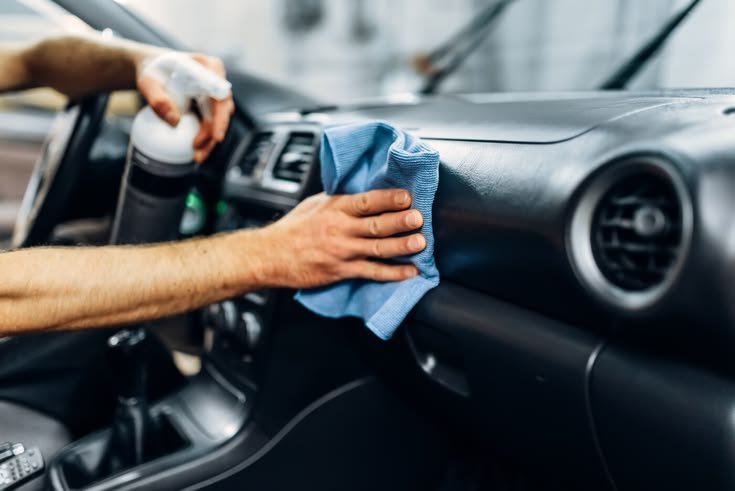
Superior Products Green All C59 is a concentrated all-purpose cleaner that the manufacturer positions for plastics, carpets and other vehicle surfaces when properly diluted. It is a plausible choice for a detailer cleaning a variety of manufacturer-approved, colorfast surfaces. It is not a blanket recommendation for touchscreens, seat belts, delicate trim or every type of leather. Vehicle-maker restrictions and the product’s safety sheet can override a cleaner’s broad marketing claims.
The search for a Superior Products interior cleaner does not lead to one universally suitable bottle. Green All, Pink Perfection, Fire Power and Zap-It serve overlapping but different cleaning jobs. Before choosing, identify the surface, the soil, whether you need a rinse or extraction step, and whether you want a concentrate you must mix or a ready-to-use product you can simply wipe away.
Choose by interior surface: where does Green All belong?
Superior’s Green All C59 product page advertises diluted use on dashboards, door panels, carpets and upholstery, with a general 10 parts water to 1 part concentrate starting point for light interior cleaning. That is a vendor recommendation for its product—not a guarantee that your particular vehicle’s fabric, leather finish or electronic components will tolerate it.
| Interior material | A defensible first approach | When not to reach for Green All |
|---|---|---|
| Ordinary hard plastic and vinyl trim | Dust first. If the vehicle manual allows a general cleaner, begin with the maker’s mildest labeled dilution, work on a cloth rather than spraying into seams, and test a hidden spot. | Avoid when the finish is delicate, coated, soft-touch, aftermarket, or its manufacturer restricts alkaline/all-purpose chemicals. |
| Carpet and colorfast cloth | Vacuum thoroughly; try a small test and plan how you will remove loosened dirt and cleaner residue without saturating backing or foam. | Avoid guessing on suede-like fabric, specialty upholstery, dye-transfer, water-sensitive materials, or stains that need a targeted treatment. |
| Leather and synthetic-leather seats | Follow the precise seat/vehicle manual first, usually a damp soft cloth and the permitted mild cleaner. | A seller’s broad “leather upholstery” claim is not enough to override a manufacturer’s coated-leather or vegan-leather instructions. |
| Screens, instrument lenses and interior lighting | Use the maker-approved lint-free cloth and screen-specific technique. | Do not substitute a general spray cleaner just because a dashboard is nearby. |
| Seat belts, airbag covers and controls | Follow safety-component cleaning guidance in the vehicle manual. | Do not soak retractors, introduce cleaner into airbag seams or put slick dressings on driving controls. |
The caution isn’t hypothetical. Tesla’s interior-cleaning guidance advises avoiding cleaners on touchscreens, while its Model S owner manual gives specific restrictions for seats, belts and lighting. A Ford owner-manual example similarly warns about chemical solvents on displays and particular upholstery. These are vehicle-specific examples, not universal manufacturer endorsements of any aftermarket cleaner.
Which Superior interior-cleaning formula actually fits the job?
For routine detail work, a cleaner, a spot remover and an interior dressing are different purchases. The Superior Products cleaner catalog distinguishes these options; the following is an editorial fit comparison based on the brand’s stated uses, not a head-to-head stain-removal test.
| Cleaner | Published purpose | Practical trade-off |
|---|---|---|
| Green All C59 | Multi-purpose concentrate; interior plastics, carpets and broader vehicle cleaning. | One bottle covers several possible jobs, but mixing accuracy and material checks are your responsibility. |
| Pink Perfection C67 | All-purpose concentrate with added soap and higher sudsing; marketed for carpet, vinyl and exterior grime. | Foam can help scrubbing, but more suds can mean more removal work on upholstery; not automatically more material-safe. |
| Fire Power C58 | Low-foaming all-purpose cleaner, marketed for carpet pretreatment/extractors. | More purposeful when you own suitable extraction equipment; verify its exact machine and dilution instructions. |
| Zap-It spot remover | Targeted carpet/upholstery spot treatment; maker says to shake separated liquid and wipe/rinse after use. | May be a better scope match for one isolated spill than mixing a large bottle of general APC. |
Sources: Superior’s C59 listing, C67 listing, and cleaner catalog descriptions for Fire Power and Zap-It. Claims about relative cleaning speed, residue or stain-removal rankings were not established by controlled comparisons.
The safety-document mismatch is a purchase decision, not fine print
Check the CURRENT Green All C59 safety sheet before buying or mixing
Superior’s public Green All SDS revised July 16, 2014 lists serious eye irritation and a Category 2 suspected-carcinogenicity classification. That is what this dated document reports; it does not verify the hazard classification of every formulation or package currently sold. The seller’s product description also contains broad gentle-on-hands language. Do not use that promotional wording to dismiss the older hazard warnings. Request the current C59 label and SDS for your actual container, follow the stated protective measures and avoid use if you cannot resolve a material safety-document mismatch.
For a casual interior-only buyer unwilling to handle and dilute a concentrate without current safety documentation, a dedicated ready-to-use product can be a more appropriate choice. Griot’s Garage Interior Cleaner, for example, is sold as a finished interior cleaner intended for fabrics and hard surfaces. Its maker’s claims do not establish that it is safe on every screen or specialty leather either; the vehicle manual remains the final compatibility check.
How dilution changes the true cost—and the likelihood of mistakes
The Superior cleaner catalog presents Green All as a multipurpose concentrate and describes a 10 parts water to 1 part concentrate light-cleaning example. This is manufacturer guidance for eligible surfaces, not proof that a stronger mixture is safe on delicate upholstery. Other indexed sample-kit directions were not independently accessible for a complete inspection during this review. Follow the current bottle label and the interior-material maker’s restrictions; if they conflict, do not improvise a higher concentration.
What a 32 fl oz working bottle needs at 10:1
If the label confirms 10 parts water to 1 part concentrate by volume, the calculation is 32 ÷ 11 = 2.91 fl oz concentrate, plus approximately 29.09 fl oz water. A full 16 fl oz concentrate could theoretically produce 176 fl oz of mixed cleaner at that ratio, before spills or unused remainder.
For cost, compare (delivered concentrate price ÷ prepared usable ounces) with the delivered price per usable ounce of ready-to-use cleaner. Add your bottle, labeling, protective supplies, cloths, water, labor and unused mixture. No stable current per-ounce price comparison can be inferred from a site’s multi-size price range.
Mix in a clearly labeled compatible container, using the exact package directions rather than a homemade stronger formula. Prepare only the amount needed. Keep original manufacturer labeling and current safety instructions accessible; don’t combine unrelated cleaners.
Three interior jobs where the “stronger cleaner” logic fails
- A sticky touchscreen: The potential loss from damaging a screen coating exceeds any saving from reusing a general cleaner. Use the car-maker’s cloth-based instructions.
- A coffee spill deep in a seat: A general APC can loosen visible grime without addressing moisture, cushion contamination or odor. A material-approved targeted upholstery process, sometimes professional extraction, is more relevant than stronger concentration. Avoid soaking seats with occupant sensors or wiring.
- Clean but dull dashboard plastic: Dirt removal and appearance protection are separate. If you want UV or finish maintenance, compare a dedicated interior detailer only after verifying material compatibility; don’t expect cleaning concentrate itself to provide tested UV protection.
Who should buy Green All—and who should pass?
- Consider Green All C59 if you repeatedly clean several ordinary, explicitly permitted interior/exterior materials, can measure water:concentrate accurately, can manage safe handling, and can obtain a current matching SDS.
- Consider Pink Perfection for a suds-oriented cleaning method or Fire Power for a low-foam extraction workflow, subject to the exact surface and equipment instructions.
- Choose a simpler ready-to-use interior cleaner if you have one car, dislike mixing, or need only light dashboard/seat cleaning.
- Choose the vehicle manufacturer’s permitted approach instead for coated leather, synthetic leather, screen coatings, safety belts and other restricted surfaces—even if that means buying no chemical cleaner.
Explore Superior Products cleaners (affiliate homepage)
Research scope: United States consumer-market product information reviewed October 13, 2026. Vehicle and material instructions vary by make, model and year. The public C59 SDS cited above is dated 2014; a current label/SDS and real checkout cost must be checked before relying on it. This guide is based on published documentation, not hands-on comparative testing.
Keep researching
More decision guides from the same topic area.
Road Warrior Superior Products: RV Streaks and Surface Fit
Use the soil and surface to decideRoad Warrior C46 is worth investigating for persistent road film or black streaks…
Read guide →
Superior Products Interior Cleaner: Match the Material
Choose the material and cleaning method firstGreen All is a multipurpose concentrate to consider for materials your vehicle maker…
Read guide →
Superior Products Dirt Buster: Hand Wash or Cherry Foam?
Dirt Buster fits a conventional hand-wash decisionDirt Buster C60 is positioned for routine hand washing. Cherry Foam C62 is…
Read guide →