
Commercial disclosure: Some links on this page are affiliate links. We may earn a commission if you purchase through them; please check the merchant’s final terms.
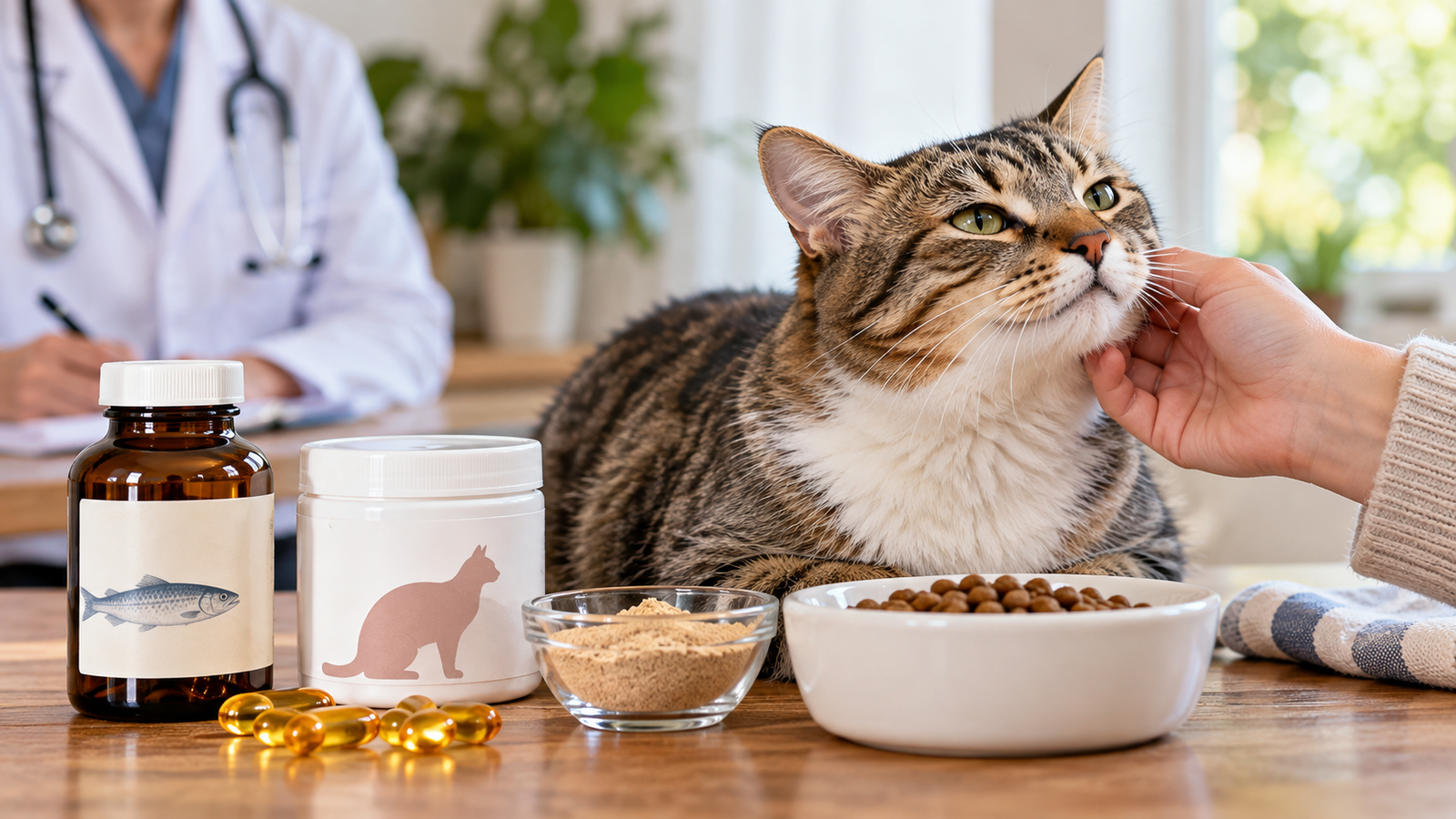
A cat with persistent scratching, hair loss, inflamed skin or overgrooming needs a veterinary assessment before a coat supplement. For an otherwise well adult cat, compare species suitability, allergens, how much of a food-mixed product the cat will actually eat, and the cost per true daily serving. La Petite Labs Pet Gala is marketed for cats, but its label is not proof of a tested feline clinical benefit.
Skin and coat supplements for cats require a different buying decision than dog products. Feline skin problems may show up as repeated licking, patchy hair loss or a reluctance to groom—not simply a dull-looking coat. This is a US-market label and veterinary-source comparison, not a hands-on trial or personalized treatment plan.
First decide whether the cat needs shopping or diagnosis
The Merck Veterinary Manual’s cat-pruritus guidance states that itching is a sign, not a diagnosis; parasites, infections and allergies are common explanations. For cats, overgrooming or scratching can hide the original trigger. A coat powder cannot rule out fleas, mites, infection, food allergy or pain. Merck’s flea-allergy reference likewise describes distinctive cat itching and skin lesions after flea exposure.
| What you see in the cat | What matters first | What the supplement decision becomes |
|---|---|---|
| Sudden bald patches, scabs, obsessive licking or persistent itch | Arrange veterinary examination; review flea prevention, infection and allergy workup (Merck). | Hold the cosmetic supplement purchase; do not use it to delay diagnostics. |
| Shabby coat plus weight change, reduced appetite or less grooming | Ask the veterinarian about systemic illness, oral discomfort or mobility, rather than assuming a nutrient gap. | No generic skin powder recommendation is justified by appearance alone. |
| Comfortable cat, normal appetite, owner wants to compare optional coat-care formats | Confirm a complete diet and label compatibility first (WSAVA nutrition resources). | Compare a cat-appropriate single-purpose oil versus multi-ingredient food powder. |
Three very different products can be called “skin and coat support”
The term covers ingredient systems with different questions for owners. An EPA/DHA-containing fish-oil product is not equivalent to a biotin chew or a multi-ingredient powder. VCA’s veterinary fish-oil reference explains that EPA and DHA are relevant fatty acids and notes gastrointestinal effects, allergies, medication interactions and certain health risks; it does not make every fish-oil dose suitable for every cat.
| Option | When it may be sensible | Information you must actually find |
|---|---|---|
| Vet-directed feline fish-oil product | When a clinician identifies a goal for EPA/DHA supplementation. | Feline-specific feeding directions, EPA and DHA amount—not merely “omega blend”—and veterinary contraindications (VCA). |
| Single-nutrient or limited-ingredient product | If a qualified veterinarian identifies a particular dietary issue or a restricted diet limits options. | Exactly which nutrient, why it is needed, compatible ingredients and whether the complete food already supplies it. |
| La Petite Labs Pet Gala mixed powder | An adult cat without a diagnosed skin problem whose owner wants a meal-mixed, multi-component routine. | Feline suitability, animal ingredients, real serving, food acceptance and cost; no trial of this finished formula was located in the inspected clinical guidance. |
| No supplement | Comfortable cat eating a nutritionally appropriate diet with no identified gap. | Maintain diet, grooming observation, parasite prevention and veterinary checks; avoid adding a costly unknown. |
Does Pet Gala actually carry a cat-use label?
Yes: the current manufacturer’s US-facing Pet Gala page states it is for adult and senior dogs and cats and shows a weight-based daily schedule for both species: under 7 lb, half a 2.5 g sachet; 7–30 lb, one sachet; over 30 lb, two. The same page advises veterinarian direction for kittens, pregnant or nursing pets. “Suitable for cats” here is the maker’s labeled intended use, not independently demonstrated feline effectiveness or a veterinarian’s approval for an individual cat.
A standard 2.5 g sachet lists 500 mg marine collagen peptides, 250 mg hydrolyzed whey protein, 200 mg beef gelatin, 100 mg bone broth, 150 mg combined omega 3-6-9, 50 mg omega-7, 8 mg ceramides and 50 mg hyaluronic acid, plus smaller quantities of additional nutrients (published supplement facts). It also declares chicken flavor, chicken liver powder and yeast extract. This mixed list deserves special attention with any fish, dairy, beef or chicken sensitivity or during a veterinary elimination-diet trial. The 150 mg omega 3-6-9 listing is not a separately reported EPA/DHA amount.
If your veterinarian has prescribed an elimination diet, ask before adding a flavored multi-animal-protein supplement. Merck explains that dietary trials depend on avoiding ingredients outside the plan; one untracked topper can defeat the diagnostic purpose.
The practical feline test: can you give it without damaging mealtime?
A powder mixed into meals saves a separate tablet, but the cat must eat the intended amount. Try not to assume that flavor claims, dog reviews or a few pleasant initial meals guarantee acceptance. If the cat refuses a medicated meal or starts leaving its food, preserving adequate intake matters more than forcing an optional cosmetic product. Ask the veterinary team about an appropriate feeding method, especially with weight loss or an existing therapeutic diet.
- Verify the exact cat weight and current label; never adapt a human or dog-only dose by guesswork.
- Ask if the cat has food allergies, pancreatic disease, bleeding concerns or medications that change the risk-benefit discussion. VCA flags several of these issues for fish oil.
- Check the supplement can be mixed into a small portion the cat will finish rather than contaminating the entire daily ration.
- Introduce only one optional change at a time with veterinary agreement when health issues are present; observe appetite, vomiting, stool and skin rather than chasing instant cosmetic results.
- Save a copy of the label and relevant lot test documentation for the cat’s clinician.
Real 30-day cost for cats: a simple serving calculation
The Pet Gala page lists 30 sachets in its standard box. A labeled half-sachet daily schedule uses about 15 sachets per 30 days, so the box lasts around 60 days. A one-sachet schedule uses 30 sachets per 30 days, so the same box lasts about one month. Those are label arithmetic, not a promise that a particular box/plan will match the checkout selection. Divide actual paid order price by days supplied and multiply by 30; repeat using renewal pricing before choosing a subscription.
The La Petite Labs refund policy (effective June 24, 2026) limits the 60-day first-order guarantee to one opened 30-sachet box per formula and excludes subscription renewals; multi-box and unopened-box returns have their own conditions. Avoid choosing a long subscription until the cat’s eligibility and eating routine are understood. Nordic Naturals Omega-3 Pet is an example of a different fish-oil format marketed for pets, but do not infer feline dosing from a dog weight table—verify feline-specific instructions with the maker and veterinarian.
Which cat owner should pass?
- The cat is itchy, scabby or losing fur: a medical investigation changes the decision.
- The cat is a kitten, pregnant or nursing: the seller calls for veterinarian direction.
- A food challenge or restricted diet is in progress: multi-source ingredients could interfere.
- The cat’s appetite is fragile: prioritize adequate food intake and clinical assessment.
- The owner expects a supplement to treat fleas, allergy, fungal disease or systemic illness: no such conclusion is supported.
If you have already cleared suitability and want to compare Pet Gala’s disclosed ingredient list, use the merchant’s current site and confirm the cat-specific label and checkout terms. The commercial link below leads to the seller’s homepage, not a product-specific verified affiliate deep link.
Review Pet Gala at La Petite Labs
Research scope: Product details and US terms checked October 20, 2026. Clinical references provide general feline care context; no evidence inspected here establishes that Pet Gala treats feline dermatitis, eliminates shedding or is superior to targeted veterinary care.
Keep researching
More decision guides from the same topic area.
Dog Training Cost: Online Courses, Group Classes and Private Help
For a U.S. owner choosing dog training, the useful number is the total cost to receive enough relevant feedback—not…
Read guide →
Online Puppy Training: What Videos Teach and What Puppies Still Need
Online puppy training is useful for teaching owners a consistent reward-based home routine, but it does not replace safe,…
Read guide →
Does Online Dog Training Work? Video, Live Coaching and In-Person Help
Yes—online dog training can be a useful way for an owner to learn, practice and get coaching for routine…
Read guide →