
Commercial disclosure: We may earn a commission if you purchase through certain links on this page.
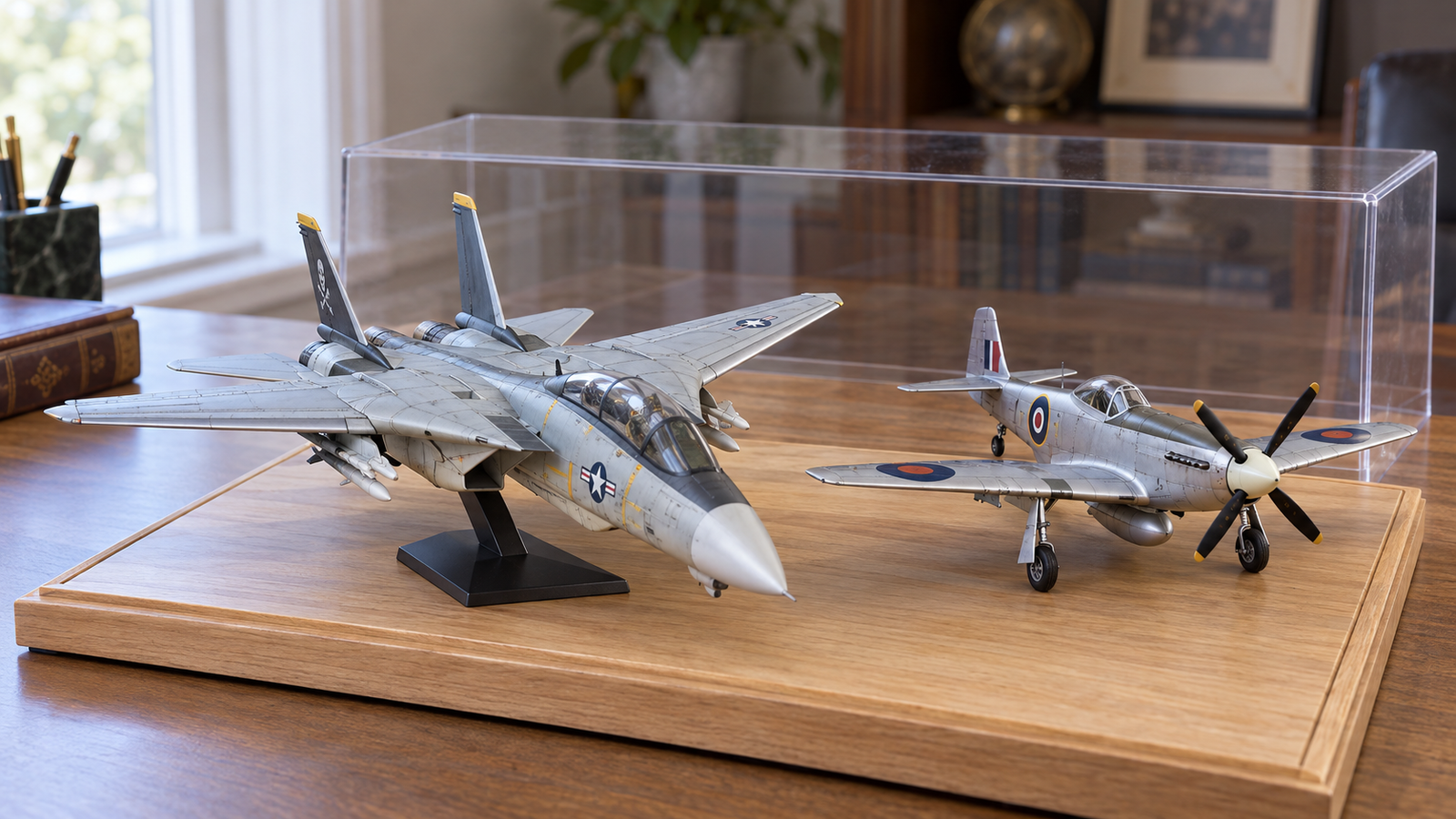
For military aircraft models, choose the actual subject and markings first—country, service, unit, era, version and loadout—then verify that the release is factory finished and fits your display. A model labeled only “F-16” can be a poor purchase for someone seeking a specific block, squadron or combat period.
Scope: This selection guide concerns static, ready-to-display military replicas, not radio-controlled models or building and painting kits. Store listings and historical references were inspected on 17 October 2026; seller finishes and release accuracy were not physically tested.
What does the model actually represent?
A collector seeking a historical subject needs more than the basic aircraft type. Distinguish airframe or variant (for example, F-14A rather than unspecified F-14), service and unit (RAF, US Navy or another operator), date or campaign, and individual markings or serial. Each narrows the eligible release. A country-flag scheme without a documented tail number may satisfy a casual display buyer but not a rigorous unit-specific collector.
“Accurate markings” should mean a traceable match to a real configuration and date, not just legible printed graphics. Seek the actual aircraft serial/registration, squadron, year and photographic reference. Optional weapons or removable components should represent the period being displayed; “more accessories” is not automatically “more accurate.”
Four different collector decisions, checked against real listings
| Example release and stated specifications | What it can answer | What still needs proof before a specialist buys |
|---|---|---|
| Israeli F-16 Fighting Falcon — 1/72, diecast metal/ABS; 21 × 13 cm; stand; ready-made. | I want a compact, clearly Israeli-marked modern fighter. | The page names the general F-16 and operator, but not a single verified variant/airframe serial/loadout. Ask for exact-release underside and tail photos. |
| P-51 Mustang Mk.IV “Dooleybird” — 1/48 metal; 20 × 23.5 cm; optional gear positions, opening canopy, removable pilot and stand. | I want a named late-war RAF Mustang with more display choices. | The Hobby Master archive entry HA7749 independently records the named Doley / No. 19 Squadron / late-1945 subject. That archive does not by itself verify that this retail box is a particular manufacturer SKU or that every factory mark is correct. |
| Avro Lancaster B.I — 1/144 diecast/ABS; 14.5 × 21.5 cm; stand; seller describes an RAF 1945 subject. | I want a World War II heavy-bomber silhouette in relatively modest shelf space. | The Royal Air Force identifies a real Lancaster span of 31.09 m; scaling by 144 gives about 21.6 cm. The retailer does not establish a specific squadron code or verified mission depiction. |
| Premium F-14A Tomcat listing — 1/72 diecast; 26 × 27 cm; variable-sweep wings, selectable gear and optional weapons. | I want configuration choices and a larger Cold War/naval fighter display. | The inspected live listing identifies a VF-1 version while another indexed description of the same path names VF-41. Confirm the exact box art, unit/serial and current SKU before ordering. |
All physical features in the table are seller-stated. The RAF and historical-archive sources support aircraft geometry or the “Dooleybird” subject; neither independently tests the retail product. The F-14 discrepancy makes a product-photo/box-code confirmation more important, not less.
Build a historical-proof checklist before a purchase
- Aircraft and subvariant: check the suffix (B.I, Mk.IV, F-14A) and visible airframe features; a generic title is insufficient.
- Unit, serial, year: write down the intended operator/squadron, code and approximate period, then match it to credible archival material.
- Configuration: inspect canopy, wing position, wheels and external stores; do not assume accessories shown in marketing photos are included.
- Marking placement: compare left and right profiles and underside photos when available. A single glamour image cannot show all insignia.
- Box and exact release: request the manufacturer or product code for expensive editions; similarly named models may be different releases.
Why matching scale is not enough
The Lancaster’s seller-stated 21.5 cm span at 1/144 is wider than the Israeli F-16’s 13 cm span at 1/72. The larger denominator did not create a physically smaller footprint because the real bomber is much bigger. For additional context, the National WWII Museum identifies the real P-51 wingspan as 37 feet (approximately 11.28 m), so a 1/48 model computes to about 23.5 cm across—consistent with the linked “Dooleybird” listing. Physical agreement supports scale plausibility, not perfection of the paint or markings.
Ready-to-display versus a build-it-yourself kit
If the recipient wants to unbox and exhibit a model, demand explicit “pre-painted,” “pre-assembled” or equivalent product evidence. The linked AirModels listings state that these examples require no painting or assembly. A model kit can give a hobbyist control over livery and weathering, but it adds tools, time, skill and a realistic risk of unfinished work. The right answer depends on whether the enjoyment is in building or in owning a finished representation.
Avoid three collector-grade mistakes
Unsupported campaign certainty: a Lancaster with general RAF/1945 labeling is not automatically a specific “Dambusters” aircraft; a fighter with Israeli markings is not automatically a documented aircraft from one operation. Changing release details: retailer indexing and live page titles can disagree; the specific SKU and box must control the decision. Fragile articulation: canopies, optional stores, stands and variable-sweep wings create display choices but also more parts to account for at delivery; the seller has not independently established long-term durability.
The special risk of importing a delicate military replica
AirModels’ shipping policy states stock ships from the UK and gives an estimated 3–5 working days from dispatch to the USA/Canada. Its returns policy requires buyers seeking a standard return to preserve unused/original condition and allows some international change-of-mind deductions, while asking for damage photos within seven days. These are published seller terms, not a prediction of any single delivery outcome; inspect and document defects promptly.
A U.S. buyer with a tight deadline or a strict need for exact unit markings may prefer a domestic specialist that exposes full release codes and a specific ready-to-display policy, even if the aircraft silhouette is also sold elsewhere. Compare fulfillment and return obligations, not just a photo or sticker price.
For an identified aircraft, ask the retailer to confirm the boxed SKU, squadron/code, paint scheme, included stand/optional parts and exact dimensions. If the answer remains generic and historical fidelity is the point of the purchase, choose a better-documented release.
Compare military aircraft selections at AirModels
Source and method note: The cited AirModels pages establish seller descriptions; the RAF, National WWII Museum and Hobby Master archive establish separate historical context. No model was handled, photographed independently or assessed for paint correctness. Availability, prices and exact boxed markings require a final seller check.
Keep researching
More decision guides from the same topic area.
Model Airplane Scales Explained: 1/200 vs 1/400 and Shelf Size
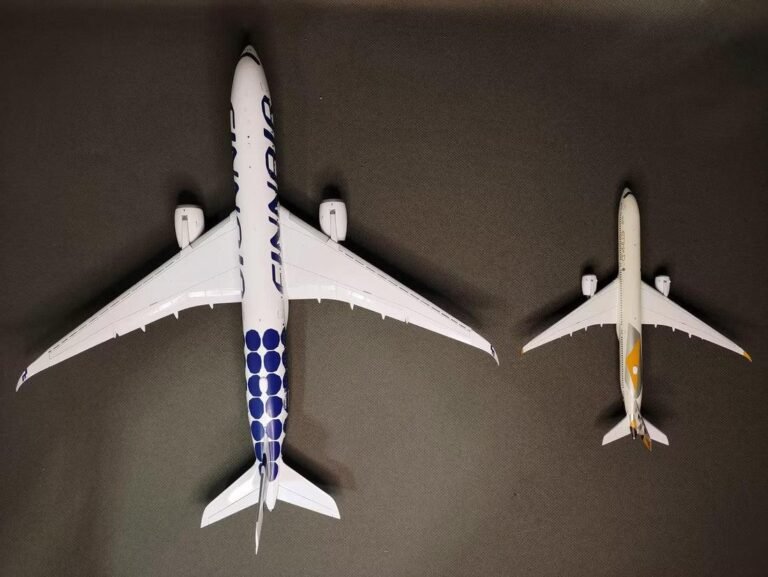
Model airplane scales: the practical answerFor the same aircraft, a 1/200 model is twice as long and twice as…
Read guide →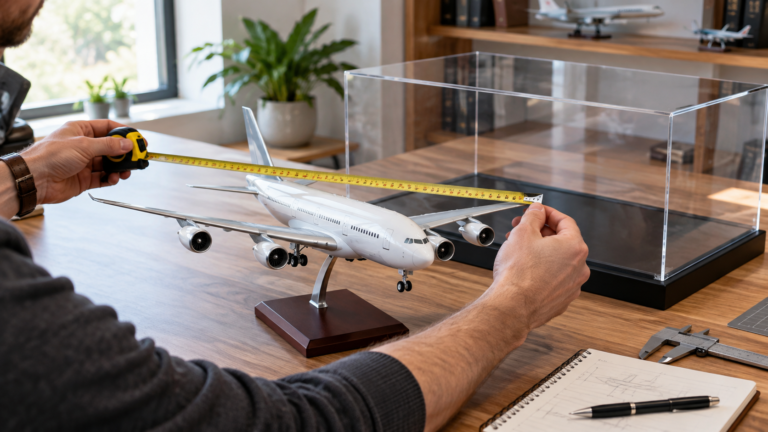
Model Airplane Display Case: Measure the Inside Before You Buy
Model airplane display case: the fit ruleChoose a protective case by the usable internal length, depth, height and access…
Read guide →
Gifts for Aviation Enthusiasts: When a Model Airplane Makes Sense
Gifts for aviation enthusiasts: first choose the kind of giftGive a finished airplane model only if you know which…
Read guide →