
Commercial disclosure: We may earn a commission from qualifying purchases made through certain links on this page. We have not independently tested the products discussed.
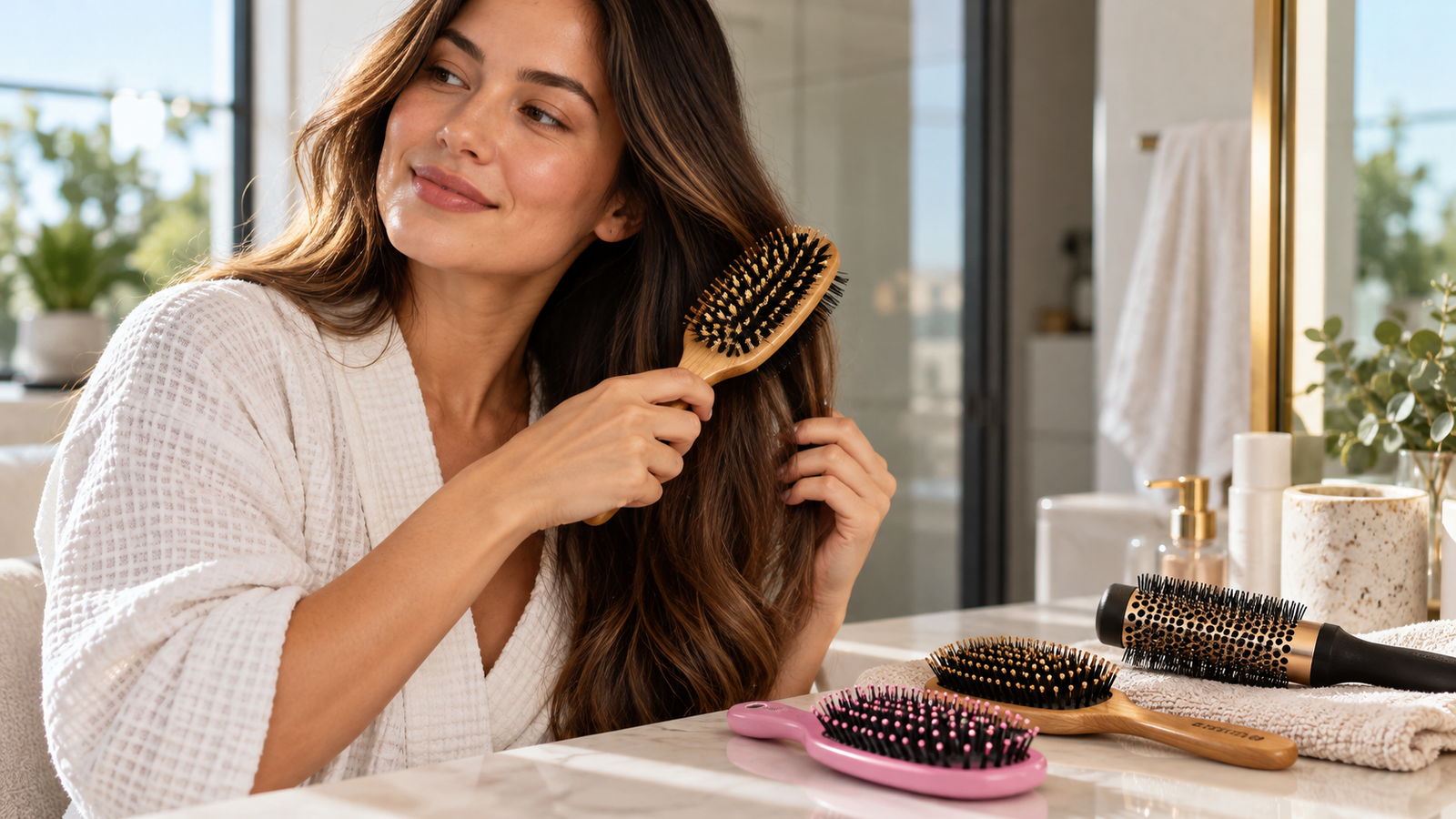
Quick decision: A boar bristle brush is primarily a dry-hair smoothing and finishing tool, not the automatic first choice for wet knots. Consider pure boar for fine-to-normal dry hair, mixed boar-and-nylon for more penetration and control, and flexible synthetic detangling tools for knot removal. Hair texture and the task matter more than luxury branding.
A good brush purchase starts with one question: Are you trying to redistribute surface oil and polish, loosen knots, or add blowout shape? Those are separate mechanical tasks. We evaluated documented bristle materials, manufacturer usage guidance, care burden and lower-priced substitutes—not lab-measured breakage or our own brushing experience.
Boar, mixed boar/nylon, and flexible nylon: three different jobs
| Type | Best starting task | What the design does | Main reason not to choose it |
|---|---|---|---|
| Pure boar bristle | Dry smoothing and distributing natural oils on finer/normal hair | Dense natural hair bristles offer surface contact; bristle stiffness and density vary | Not designed as the primary wet-knot removal tool; animal-derived material |
| Mixed boar plus nylon pins | Dry smoothing when extra penetration is useful | Longer nylon pins help move through denser sections while boar tufts polish | Still not a substitute for careful wet detangling; may pull if forced |
| Flexible synthetic detangler | Gradual removal of knots, especially with suitable slip | Bending nylon/synthetic elements and a gentle technique are central to the task | May deliver less of the classic boar-bristle dry-polishing finish |
| Round brush with boar/nylon | Blow-dry shaping, tension and controlled volume | Round barrel and brush tension help shape a section during drying | Heat and tension add technique and damage considerations |
These are design and suitability distinctions, not outcome rankings. Mason Pearson’s brush-selection guidance recommends pure boar for fine-to-normal hair and mixed boar/nylon for normal-to-thick hair. BUR BUR’s Essential is a mixed boar/nylon brush marketed especially for medium-to-thick hair. The two manufacturers support the same general task split without proving a particular brush is superior.
Don’t confuse a finishing brush with a wet detangler
The American Academy of Dermatology advises gentle detangling with a wide-tooth comb, working gradually from ends toward roots. Its recommendations differ by hair pattern: straight hair can be allowed to dry a little before combing, while thick, curly hair may be easier to comb with conditioner in the shower. That is stronger independent technique guidance than a brush advertisement promising “no damage.”
The Wet Brush Original Detangler uses flexible IntelliFlex bristles and is described by its maker for wet or dry tangles; its listed U.S. price was $10.99 when checked. Its claimed breakage reduction is the brand’s test claim, not a head-to-head result against BUR BUR. If the problem is painful knots rather than dry-hair shine, a basic detangler or wide-tooth comb may save substantial money.
What the BUR BUR Mermaid Essential actually is
The Mermaid Essential Boar Bristle Brush was listed at $78 USD and specifies beechwood handle, rubber cushion, natural boar bristles and nylon pins, with handcrafted-in-Korea positioning. This is not an all-boar-only brush: the word “pure” in the merchant description refers to the boar fibers, alongside explicitly present nylon pins. The Mini Essential was listed at $58, with similar stated material roles and a compact format.
For someone who already owns a working detangler and wants a premium dry-hair finish, the Essential’s mixed-pin configuration is coherent. For someone whose hair knots when wet, paying $78 for a finishing brush before buying a gentle detangler solves the wrong problem. For buyers who avoid animal materials, neither Essential version is a suitable choice; the Mermaid Wet Detangling uses nylon bristles instead.
An evidence-based buying checklist
- Hair density versus strand thickness: fine strands are not always low-density hair. Mason Pearson’s Pocket BN4 even names fine-textured, high-density hair in its brush guidance; do not confuse “fine” with “thin.”
- Contact and snagging: check whether pins are flexible/rounded and whether the brush can move without tugging. Stop when it catches; conditioning slip and smaller sections may matter more than the logo.
- Animal material: actual boar bristles are animal-derived, even if the brand says they are ethically sourced. A nylon-only brush avoids that material issue.
- Heat: only use a brush for blow-drying if its model is designed for that purpose; BUR BUR’s Round Brush has a ceramic-coated aluminum barrel, unlike its cushioned Essential.
- Maintenance: dense natural bristles trap loose hair and residue; inspect cleaning directions and allow adequate drying rather than soaking a wooden handle.
The real cost is not just the ticket price
| Candidate | Published use / material fact | Price context | What buyer should verify |
|---|---|---|---|
| BUR BUR Mermaid Essential | Mixed boar-and-nylon, dry smoothing | US-facing listing $78 | Whether that finishing task deserves a premium versus your current tool |
| BUR BUR Mini Essential | Compact mixed boar-and-nylon | US-facing listing $58 | Smaller head is convenient for portability but may need more passes on long hair |
| Wet Brush Original Detangler | Flexible synthetic detangling, wet/dry | Manufacturer listing $10.99 | Not a like-for-like boar-polishing alternative |
| Mason Pearson pure-boar / mixed lines | Separate pure-boar vs mixed selections | No directly comparable verified US price used | Model, country-specific seller, authenticity and cleaning expectations |
Material descriptions and product pages: BUR BUR Essential, BUR BUR Mini, Wet Brush and Mason Pearson. Product prices are changing reference displays, not universal checkout totals. The Mason Pearson UK store’s delivery terms are not a substitute for verified U.S. availability.
Cleaning and avoiding damage
BUR BUR’s published brush-care guidance recommends removing trapped strands every few uses, washing the bristles every two to four weeks using mild soap, keeping the wooden handle dry, and allowing the brush to dry bristles down. Its two-sided cleaner instructions assign the metal-comb edge to Essential’s dense boar bristles and nylon side to the detangler. A branded cleaning tool is optional; a safe method that does not snag the brush or your fingers is the goal.
There is no evidence that a daily “100-stroke” routine is required; the AAD explicitly warns against excessive brushing and tugging. Avoid forcing a brush through mats, and do not use heated round-brush tension beyond what your hair tolerates.
Review the BUR BUR brush collection (BUR BUR homepage; check the exact product and current terms before checkout).
Verdict: a brush chosen by task beats a brush chosen by material alone
Choose boar bristle when dry styling and polished finish are genuinely your priority; choose flexible detangling when knots are the priority; choose a mixed brush when your hair and task call for stronger bristle penetration. A wide-tooth comb plus conditioner may be the most sensible option for wet hair. None of these tools is proven here to stimulate hair regrowth, and price alone does not establish durability or results.
Source check: October 30, 2026. General U.S. consumer decision; evidence comes from AAD guidance and cited manufacturers. No physical brushes were tested.
Keep researching
More decision guides from the same topic area.

Hair Oil for Fine Hair: Choose a Formula Without Flattening Volume
Quick decision: For fine hair, start with no extra oil if conditioner already gives enough slip. For a few…
Read guide →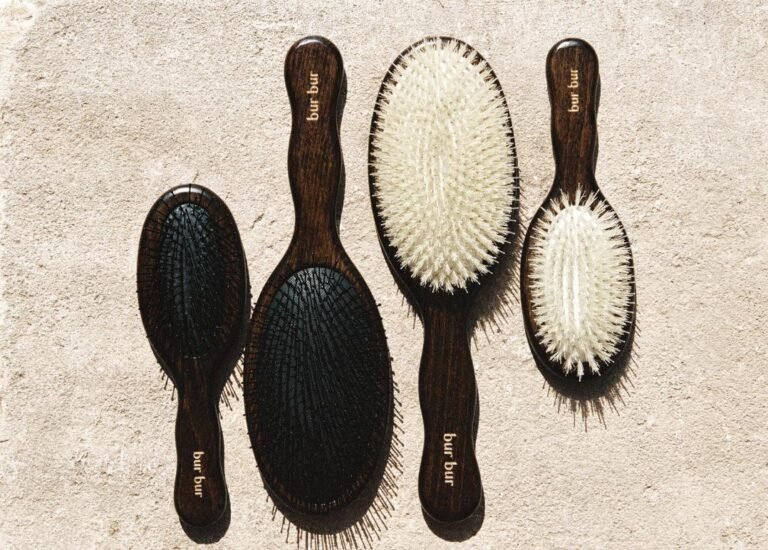
BUR BUR Mermaid Brush: Which of the Five Models Fits Your Routine?
Quick decision: For a dry-hair smoothing brush, compare Mermaid Essential or Mini Essential. For wet/dry detangling, compare Wet Detangling…
Read guide →
Bur Bur Hair Oil Reviews: Is Growing Season Worth $56?
Quick decision: Growing Season is a reasonable candidate for someone who wants a scented, multi-oil pre-shampoo ritual and accepts…
Read guide →