
Commercial disclosure: We may earn a commission from qualifying purchases made through certain links on this page. We have not independently tested the products discussed.
Quick decision: Burdock root can be an ingredient in a conditioning hair oil, but there is no good basis to promise that a burdock-infused cosmetic product will regrow lost hair. Choose the finished formulation, application method and allergy fit—not the plant name alone.
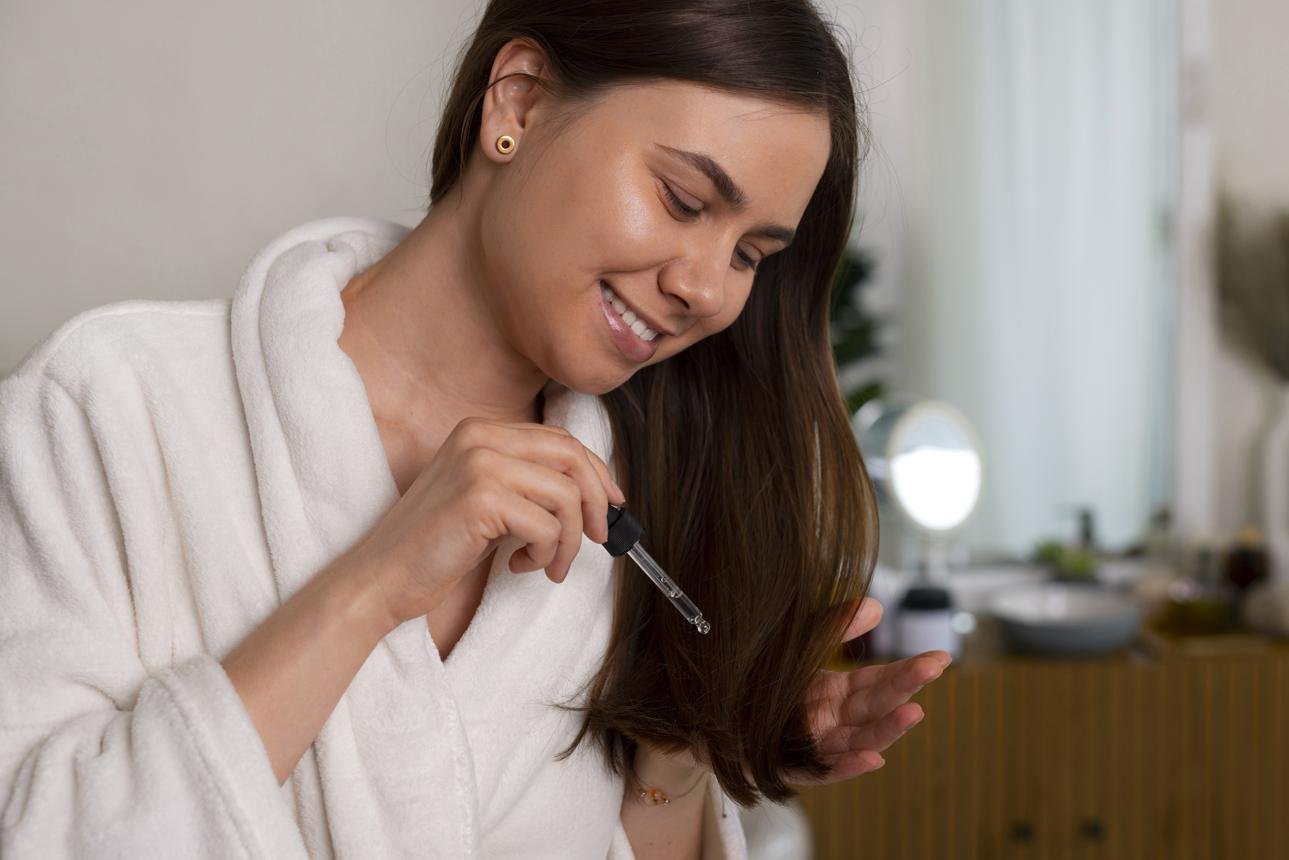
Burdock oil for hair is a confusing shopping phrase. It may refer to a plant-root extract infused into another oil, a mixed botanical treatment, or a product that markets burdock but has a very different base formula. The differences matter if you want softness, scalp comfort, or something that truly addresses hair loss.
What is ‘burdock oil’ in a cosmetic formula?
Burdock (Arctium lappa) is a plant. On a product label, its extract may be infused into a carrier oil; this does not necessarily mean the bottle is a single-ingredient oil pressed from burdock root. For example, BUR BUR Growing Season Hair Oil lists olive fruit oil first and identifies a botanical infusion of burdock root and nettle, alongside jojoba, baobab, squalane and other components.
It is therefore misleading to attribute every possible feel or outcome of that finished blend to burdock alone. The oils, scent components, texture, frequency and wash-out directions all influence the experience. Supplier claims about one extract cannot substitute for testing the full formula.
Does burdock oil grow hair?
The human-evidence gap is the deciding point. The 2025 critical review in Frontiers in Pharmacology discusses Arctium lappa components such as arctiin and reports laboratory effects in human dermal papilla cells, but explicitly notes the absence of direct human clinical data demonstrating hair regrowth with burdock extracts. Laboratory cell protection is not the same thing as new hair growth on a scalp.
That finding is about the state of burdock-related evidence, not a randomized trial of every commercial oil. It does not establish efficacy, and it does not justify using a botanical treatment in place of evaluation for progressive hair loss. The American Academy of Dermatology distinguishes excessive shedding from loss caused by underlying conditions and describes why the cause matters.
Three label decisions that matter more than buzzwords
| Check on the bottle | Why it matters | Practical choice |
|---|---|---|
| Carrier oil and full INCI | The majority of the formula may be olive, coconut, argan, jojoba or another base, not burdock itself. | Prefer a clearly disclosed formula over an unquantified “burdock-powered” claim. |
| Use format: pre-shampoo vs leave-in | An oil that must be washed out adds time and shampoo steps; a finishing oil stays on lengths. | Choose by when you want the softness, not the botanical story. |
| Fragrance and reactive-skin compatibility | Essential oils and limonene/linalool can matter for sensitive users; DermNet describes contact-allergy mechanisms. | If you already react to fragrance, a plain or fragrance-free formula is a more conservative starting point. |
What can hair oil realistically do?
The useful non-medical case for oils is conditioning the hair fiber: managing friction, adding perceived softness, and changing surface shine or feel. However, different oils are not interchangeable. In the published abstract of a 2003 hair-fiber study, coconut oil showed reduced hair-protein loss in the study’s pre-/post-wash tests, whereas sunflower and mineral oils did not show the same effect. The work does not demonstrate burdock-infused oils grow new hair; it is evidence that specific oil chemistry and measured endpoints matter.
For everyday fragile hair, the American Academy of Dermatology recommends gentle shampooing, moisturizing conditioner, and reducing practices that lead to breakage. Before adding a new oil, it may be more economical to correct abrasive brushing or an overly harsh wash routine.
Compare finished products, not folklore
| Example product | What its own labeling establishes | Best decision use |
|---|---|---|
| BUR BUR Growing Season | Official product description; 50 mL blend with burdock/nettle infusion; 45-minute minimum pre-wash guidance. | A scented, multi-ingredient pre-wash ritual; not an evidence-based hair-loss treatment. |
| The Ordinary 100% Argan Oil | Official ingredients/directions; a single listed argan-kernel-oil ingredient, used on clean damp hair. | A simpler ingredient and hair-shine use case; no burdock in the formula. |
| Fable & Mane HoliRoots | Official ingredients/directions; multiple plant oils and a five-minute minimum pre-wash direction. | Another pre-wash ritual with different botanical ingredients and a shorter minimum time. |
These are use-case comparisons, not laboratory rankings. No controlled data were found showing that the BUR BUR blend is clinically superior to the listed alternatives; choosing a different formula can still be perfectly rational.
How much will a routine actually cost?
For the BUR BUR example, the displayed U.S. price was $56 for 50 mL when checked. A hypothetical 2.5 mL treatment costs $2.80; a hypothetical 5 mL treatment costs $5.60. Your real amount may differ. Repeated twice weekly, an intensive oil habit can become an ongoing expense without necessarily solving the underlying problem you wanted to address.
Its 14-day return policy normally requires unopened merchandise; that makes a blind scent or skin-sensitivity trial a meaningful purchase risk. Where known allergies or ongoing irritation exist, consider avoiding unsuitable blends rather than trying to patch-test your way into a product that contains an identified allergen.
Who should buy a burdock-infused oil—and who should not?
- Possible fit: A person who likes botanical pre-wash routines, wants a particular sensory profile, can tolerate the ingredients, and understands cosmetic—not clinical—outcomes.
- Better to choose another product: A fragrance-sensitive shopper seeking a short ingredient list or a quick post-wash shine product.
- Do not use it as the answer: Persistent unexplained shedding, bald spots, scalp inflammation or progressive thinning. A dermatologist can assess the cause.
- No purchase may be needed: If a gentle shampoo and conditioner routine already produces manageable hair, an added botanical oil is optional.
Source and scope note: Product, price, directions and policy pages were checked October 30, 2026, for a U.S.-oriented shopping decision. Prices, formulations, availability and return conditions can change; confirm them at checkout. This is an evidence-led editorial assessment, not a hands-on product test or medical diagnosis.
Keep researching
More decision guides from the same topic area.
Hair Oil for Fine Hair: Choose a Formula Without Flattening Volume
Quick decision: For fine hair, start with no extra oil if conditioner already gives enough slip. For a few…
Read guide →
Boar Bristle Brush Guide: Pure, Mixed or Synthetic for Your Hair?
Quick decision: A boar bristle brush is primarily a dry-hair smoothing and finishing tool, not the automatic first choice…
Read guide →
BUR BUR Mermaid Brush: Which of the Five Models Fits Your Routine?
Quick decision: For a dry-hair smoothing brush, compare Mermaid Essential or Mini Essential. For wet/dry detangling, compare Wet Detangling…
Read guide →